WELCOME TO MY NEW HOME!
An overlooked design problem gets tackled in this personal design exploration.
Fox Factory has become one of the most powerful brands in the world of off-roading, earning its reputation by building shock absorbers that can take punishment in the harshest of environments. Their work have been tested in the most extreme conditions with enormous success, having supported multiple championship winning teams in the Baja 1000, the Mint 400, the King of the Hammers, and many other off-road gauntlets.
In 2022, Fox looked to extend the face of their brand by building a truck inspired by the race winning vehicles they helped support. Sporting major performance upgrades like a Whipple supercharger, 37” tires, bespoke Method wheels, and an all-new mid-travel suspension kit, the Fox Factory Silverado personifies the brand’s racing prowess into a monster off-roading package, ready for people to drive straight off dealership lots and into gravel trenches across the country.
MISSION:
In 1 Month, design a sofa that could be just as comfortable as a modern sofa, but is easier to move and looks unique in any space.
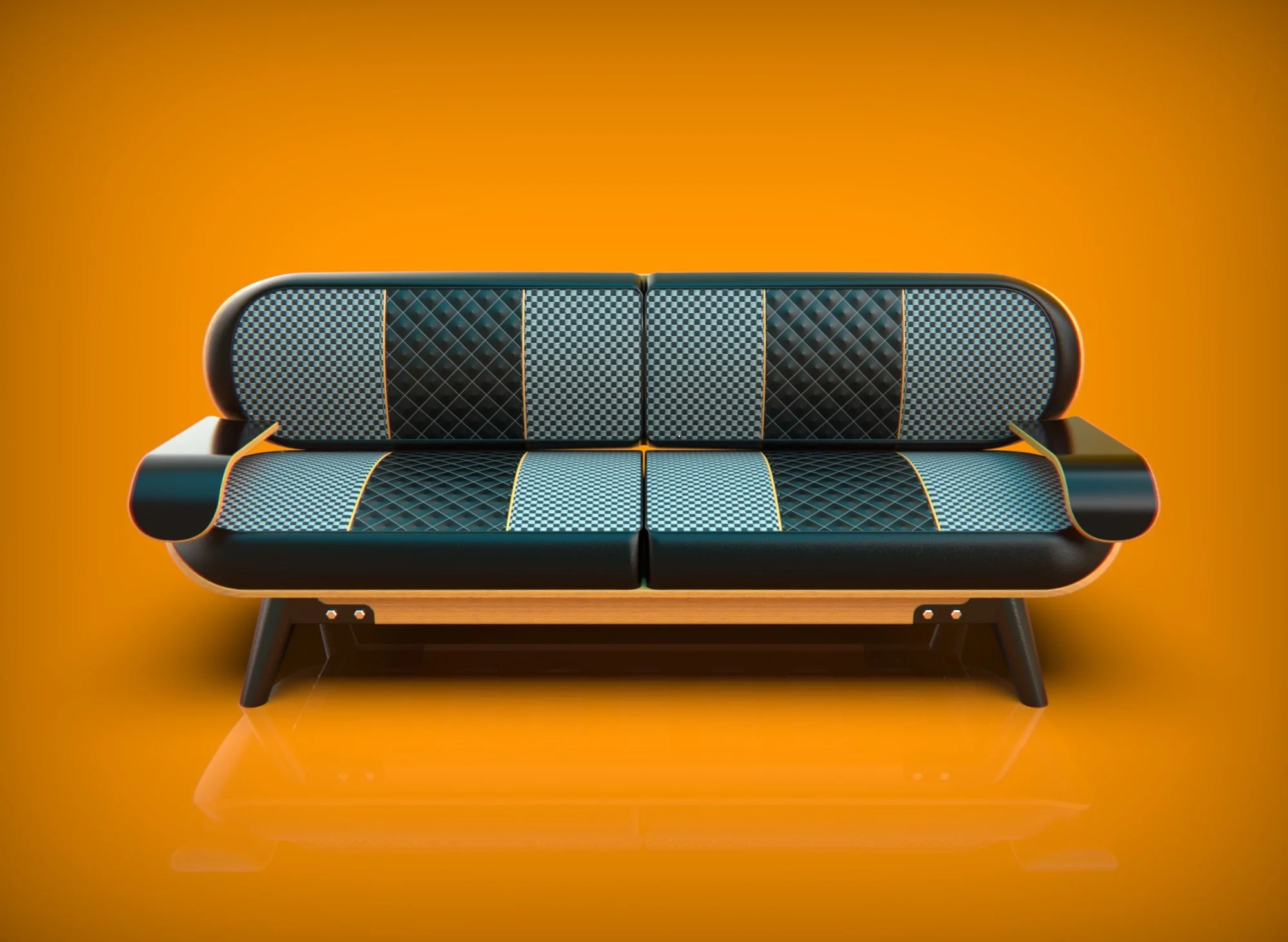
SKATE DECK SOFA
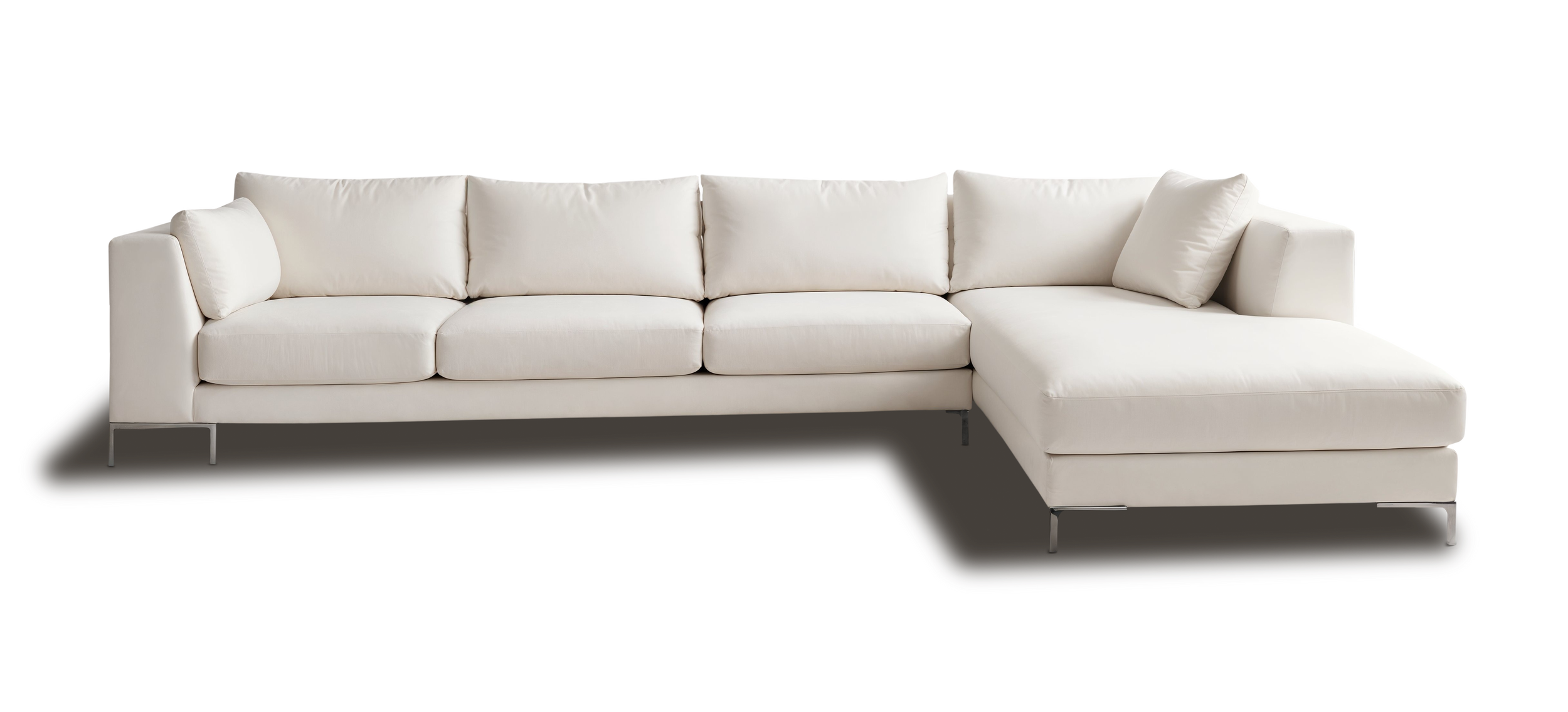
CURRENT SOFA ARCHITECTURE IS OVER 300 YEARS OLD.
WHY HASN’T IT CHANGED?
Like any other “analogue” product, the architecture of the common sofa follows the “form follows function” rule. In this case, a sofa’s function to be a soft resting place for multiple people that is comfortable in a variety of seating positions. Wether it be sitting up, slumping, laying down, or even plopping down, the sofa should provide a positive experience.
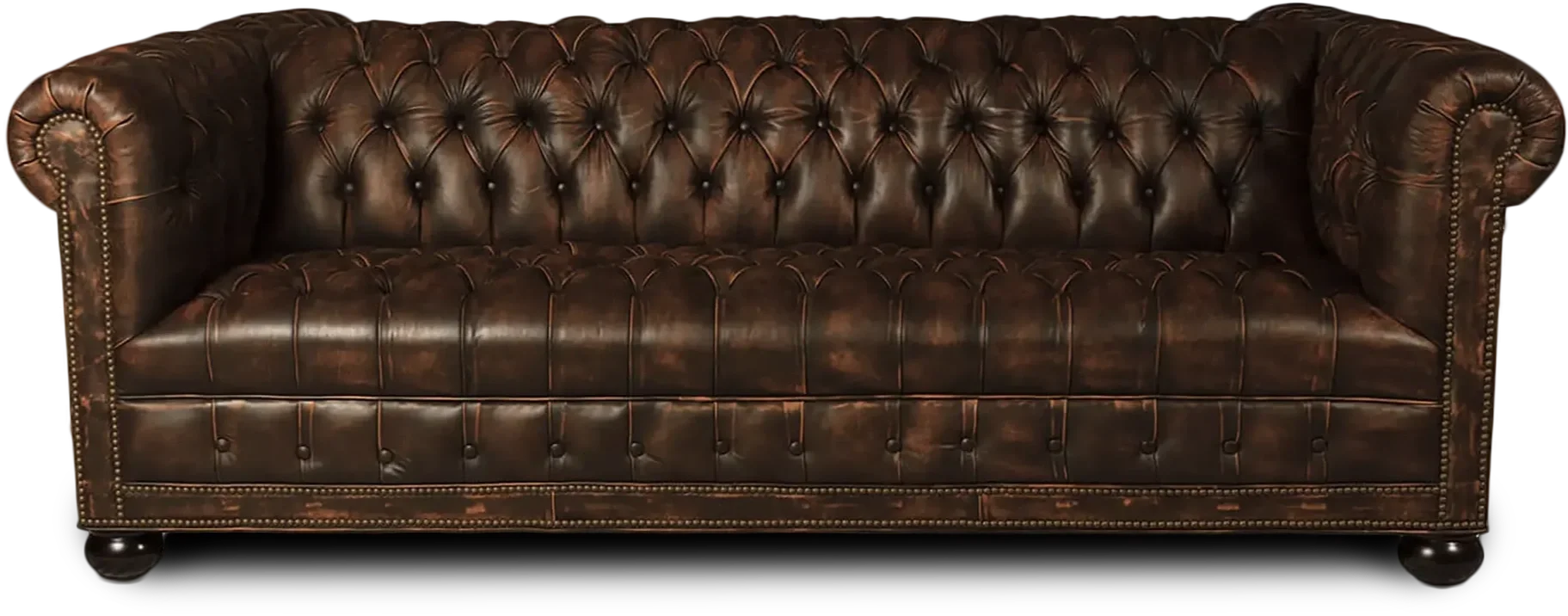
The Chesterfield style sofa was pretty much the perfect answer to this comfy multi-seating issue, and its design can be dated back to about 300 years ago. The differences between its design and any modern day sofa are practically invisible. It is a product which has received minimal innovation in its architecture. Some innovations have occurred over time, like the creation of massage sofas or recliner sofas, but neither of those things actually made moving better. Arguably, they made moving worse with the addition of mechanical equipment.
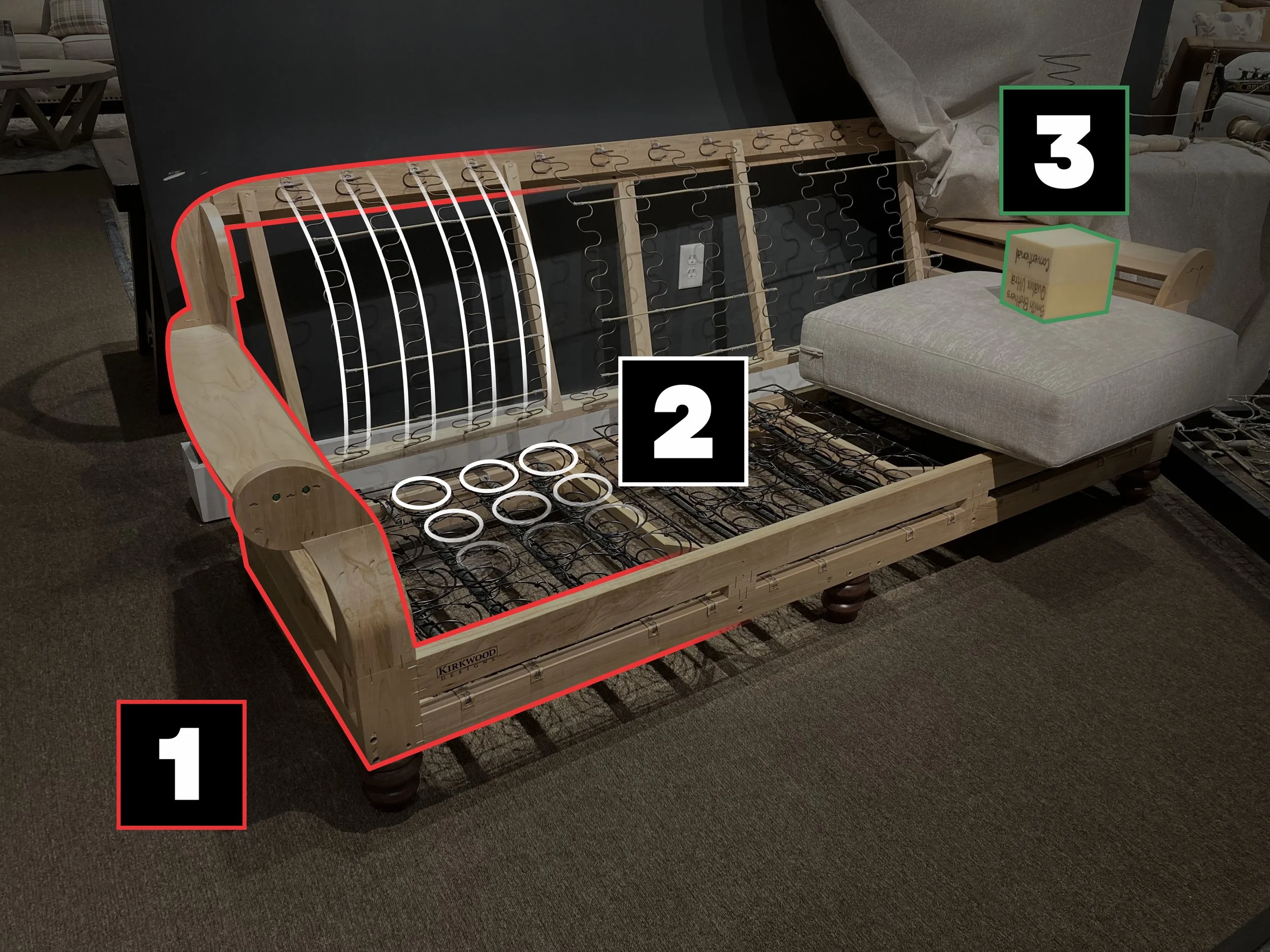
What’s inside?
-
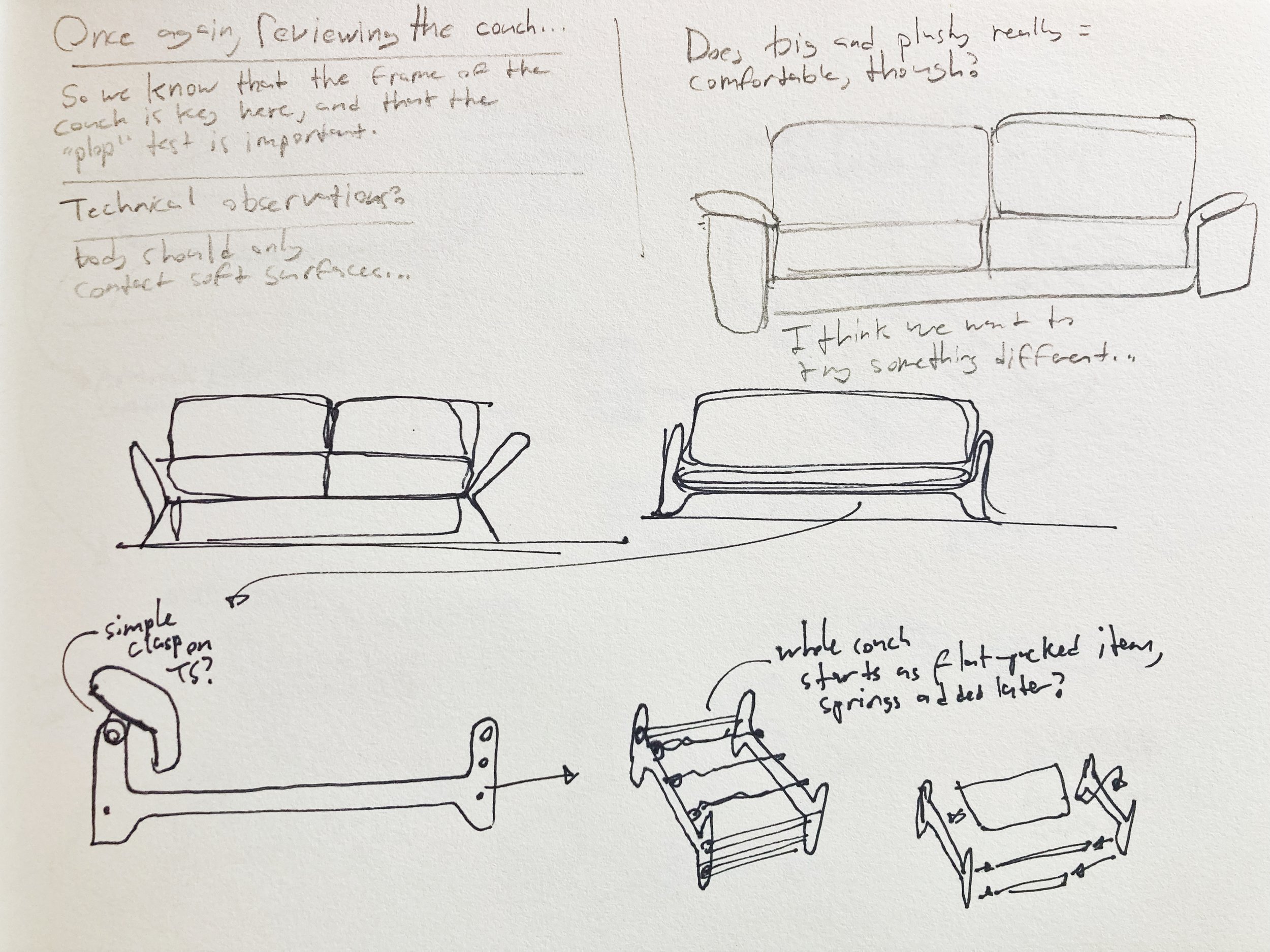
Most all sofas are built using a wood frame featuring joinery that is covered by the upholstery, or is fixed in place. This ensures that the sofa can be covered in plush material and maintain form with no disturbing protrusions poking the sitter. However, this does not allow a sofa to be disassembled.
-
Springs enable the sofa to bear multiple types of loads from multiple angles. If someone were to “plop” into a sofa (or any other form of hard fall), a lack of springs means the frame would take the load and risk breaking, or cause injury the user. Springs also add another level of plushness below the cushions.
-
The cushions are typically made of mixed density foams layered on top of each other. These sit on top of the springs and create that nice, plushy landing space sofas provide. They also distribute the weight of a person across the springs so no pressure points occur in a single area on the user’s body.
SETTING THE “BENCH” MARK
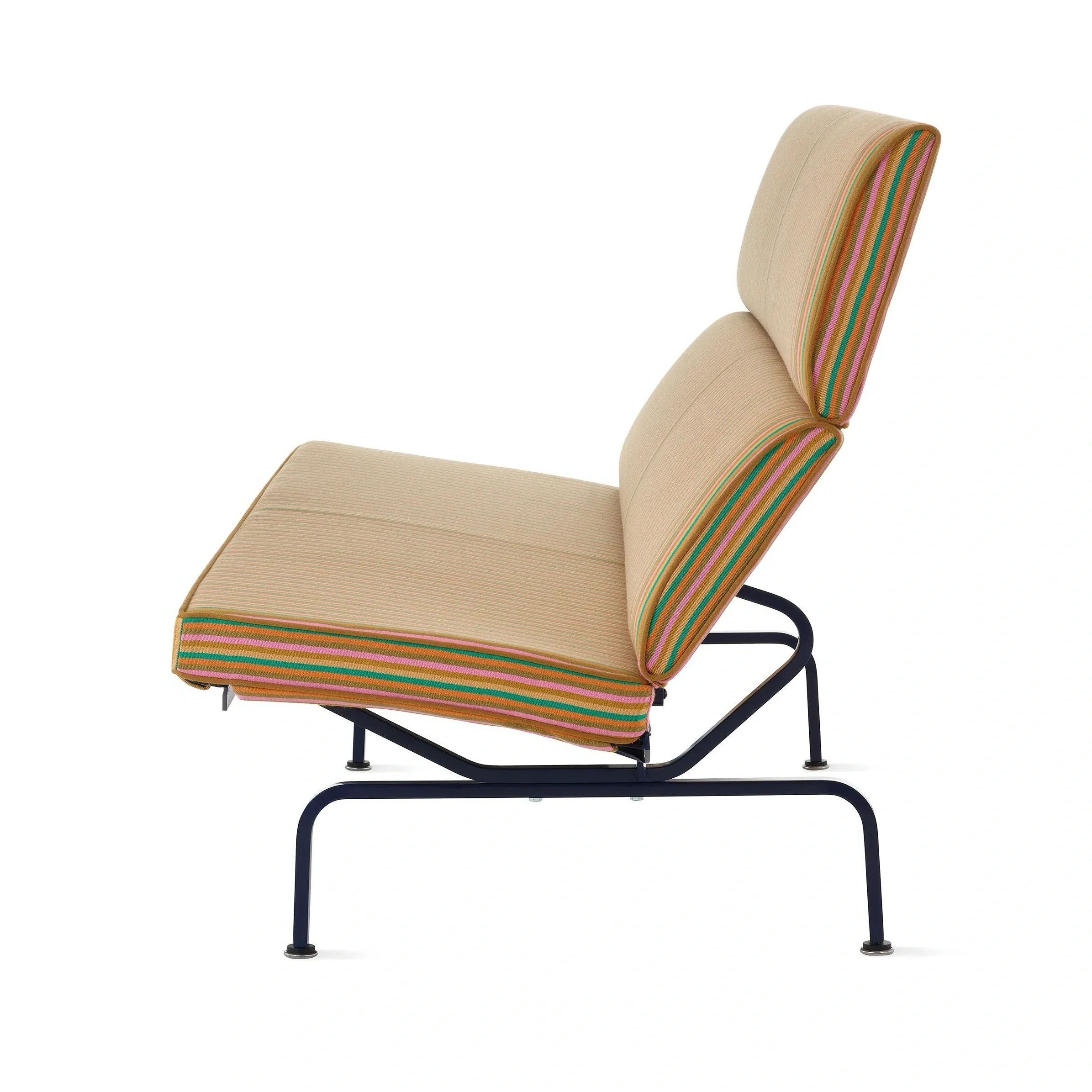
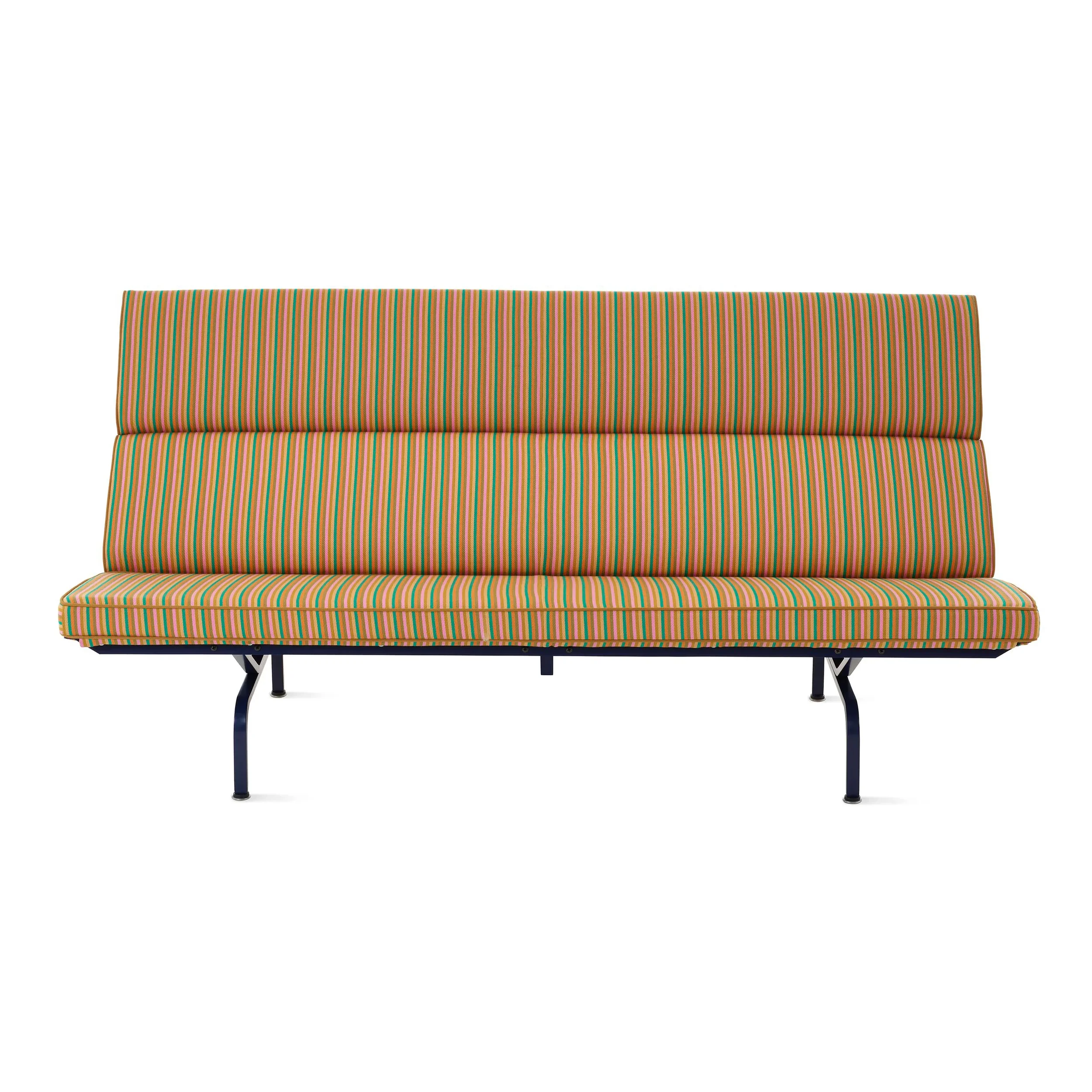
The mobile sofa problem sofa was actually solved in 1954 by Charles and Rae Eames. The Eames Compact Sofa for Herman Miller was created to alleviate issues related to shipping costs. This was done by making the sofa out of a foldable metal frame with exposed hardware, and included springs throughout the cushioning. So, like a traditional sofa, it contained the three major ingredients that make up a sofa’s architecture: a frame, springs, and foam cushions.
It is unknown exactly why the Eames Compact Sofa has not become a mainstay in homes, but part of the reason may be because it resembles a bench more than a sofa. Does it visually give the cues of comfort? does it possibly look too weak for larger people? Whatever the case, it is definitely worthy of being a design benchmark due to its focus on mobility. The sofa to be designed, then, was aimed to fill a gap somewhere between a modern sofa and the Eames Compact.
We want our guy in this space.
PENCIL IT OUT.
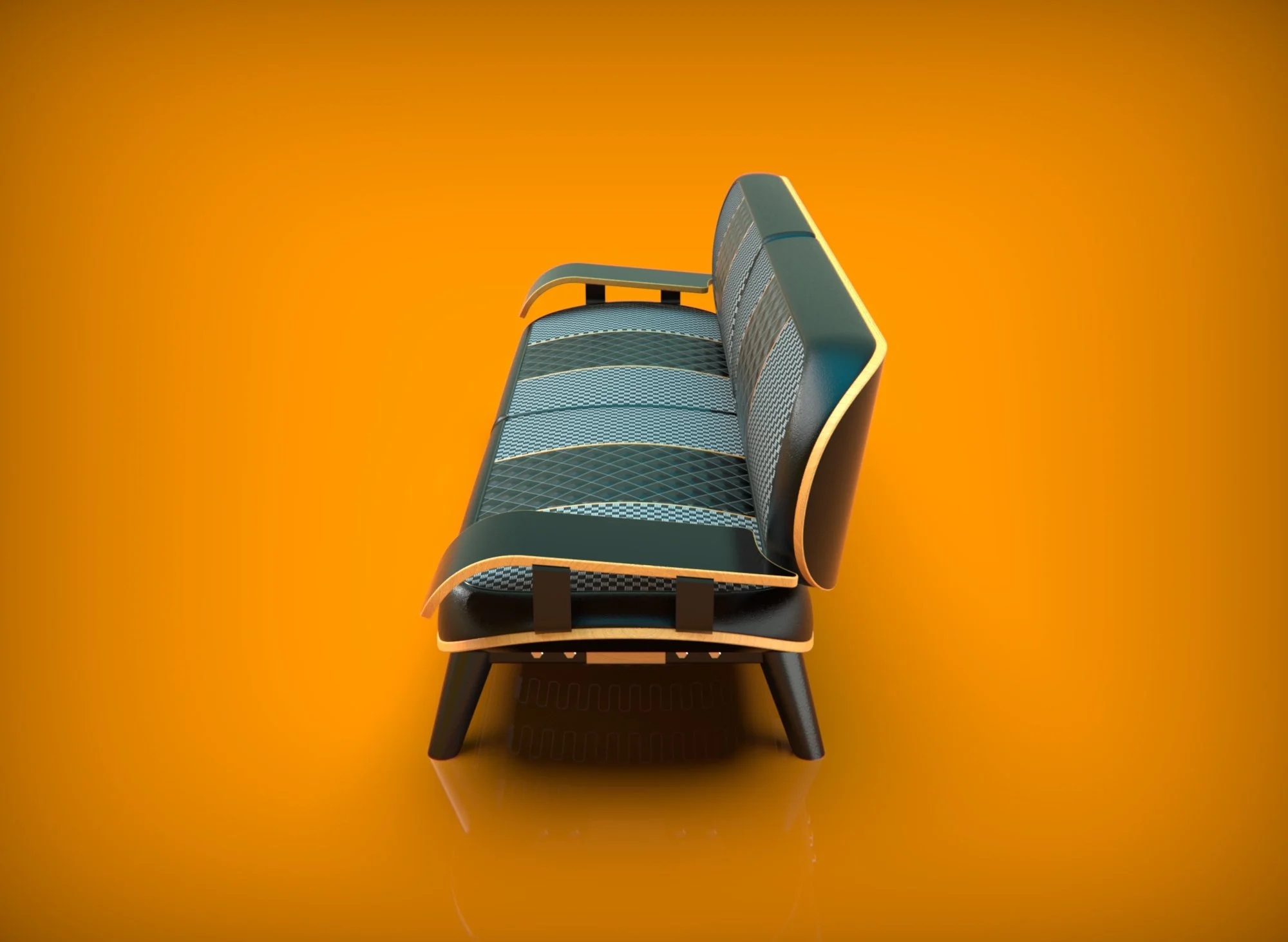
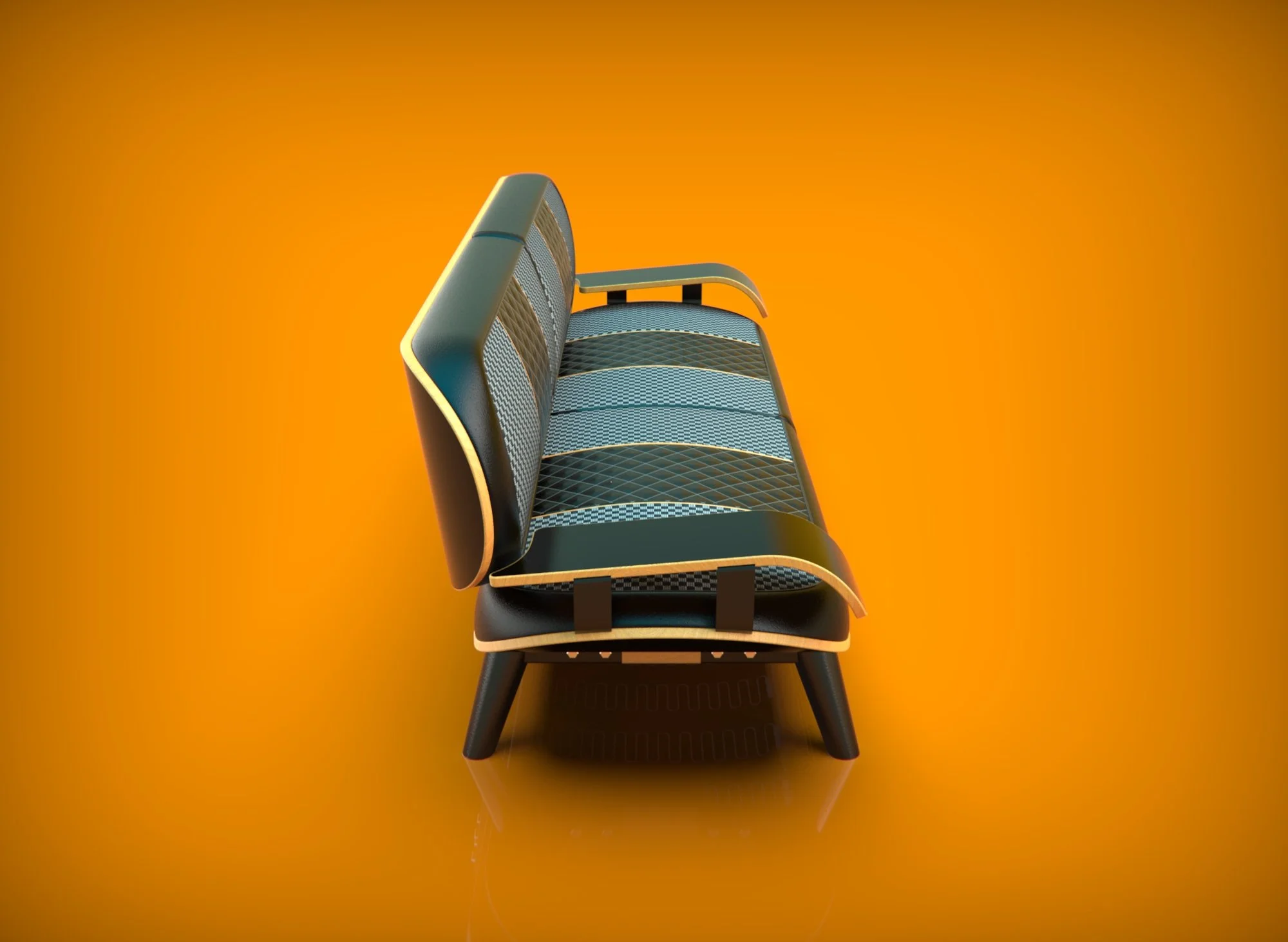
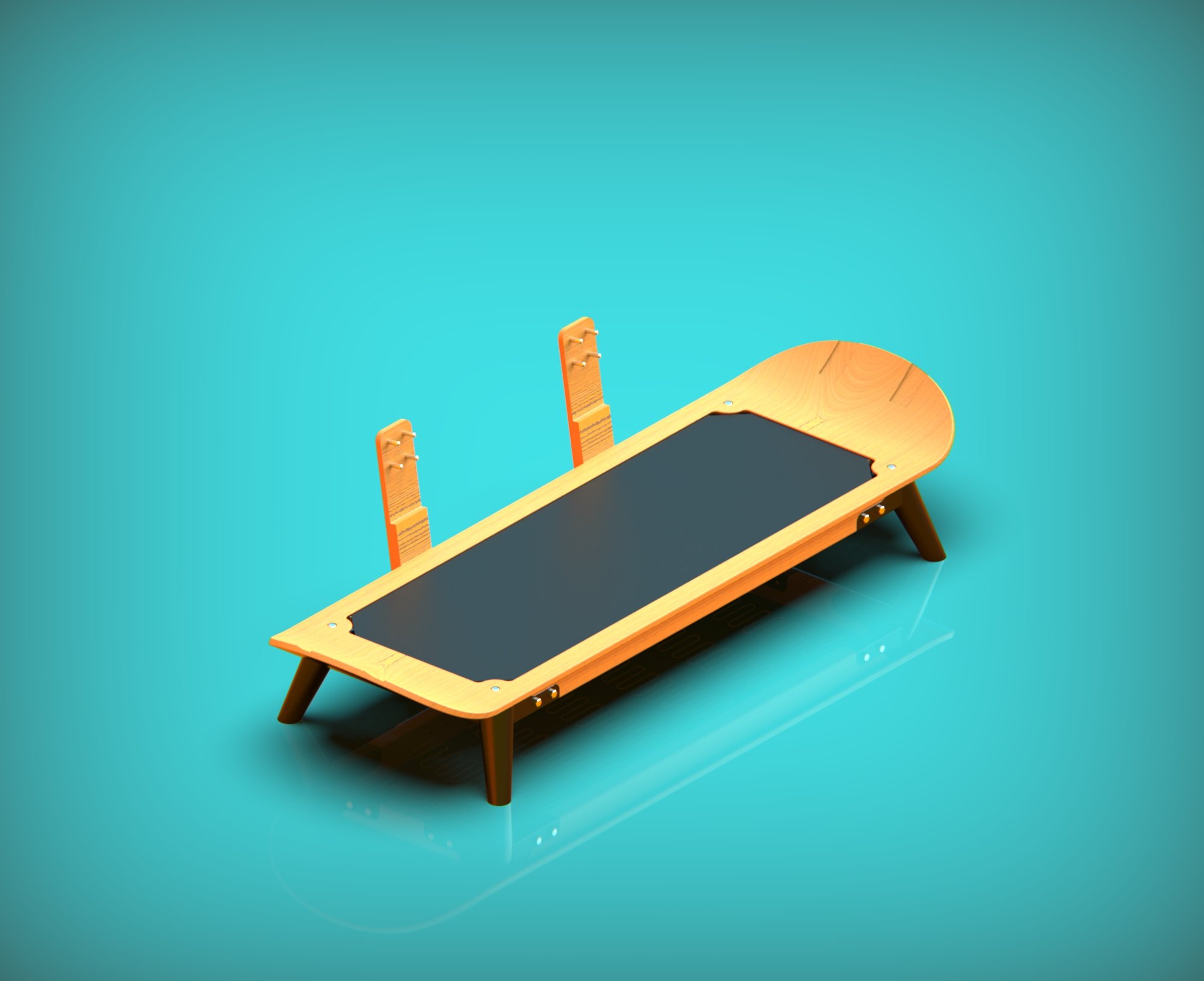
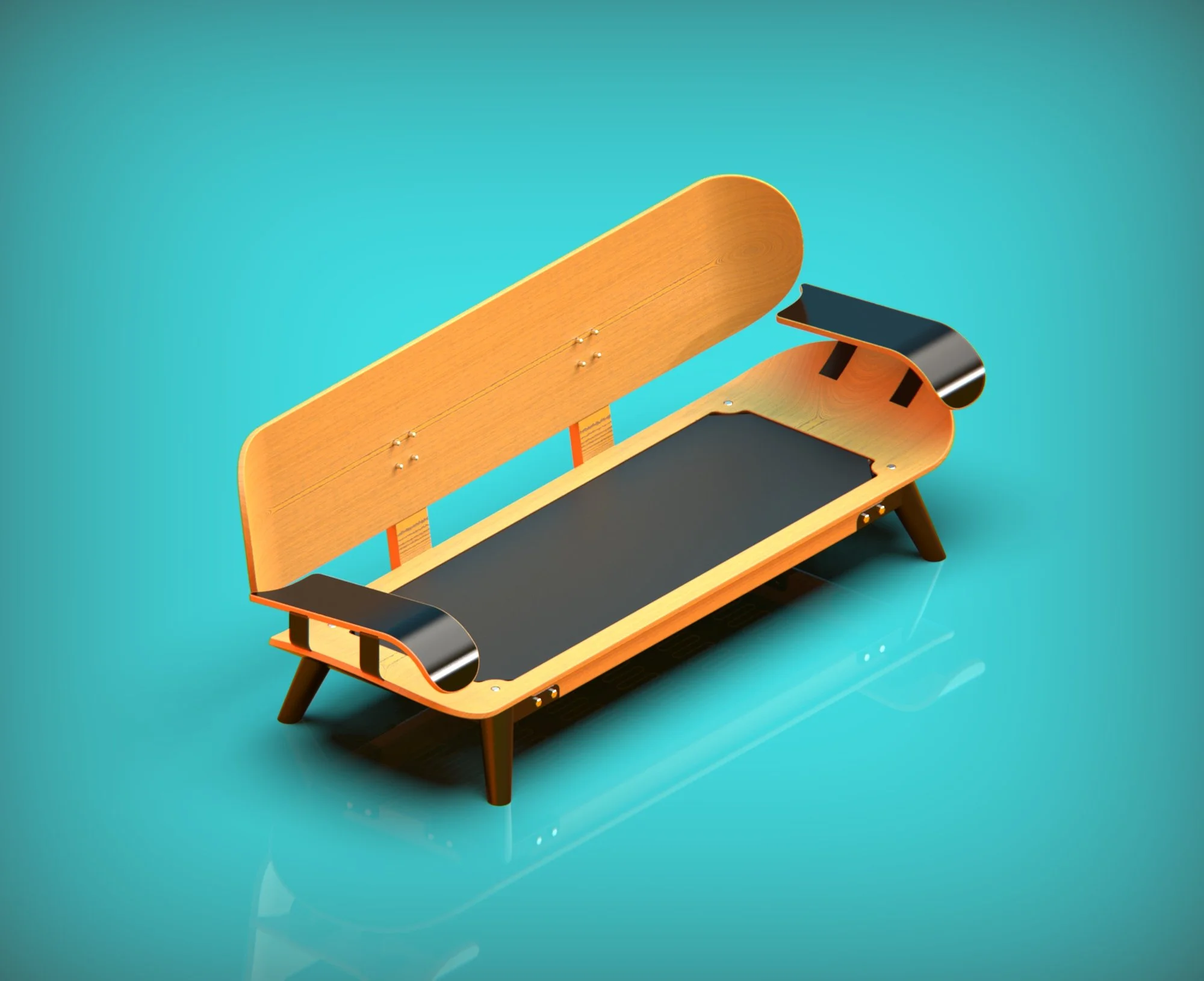
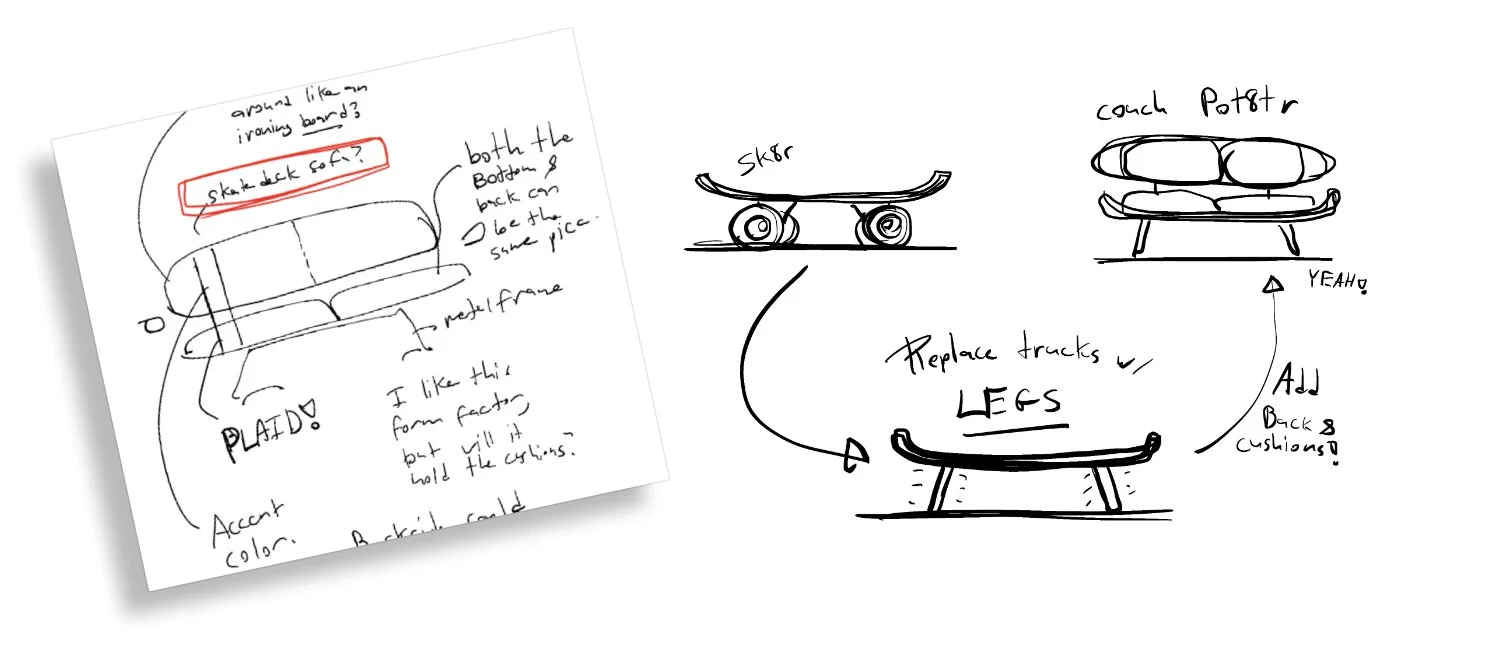
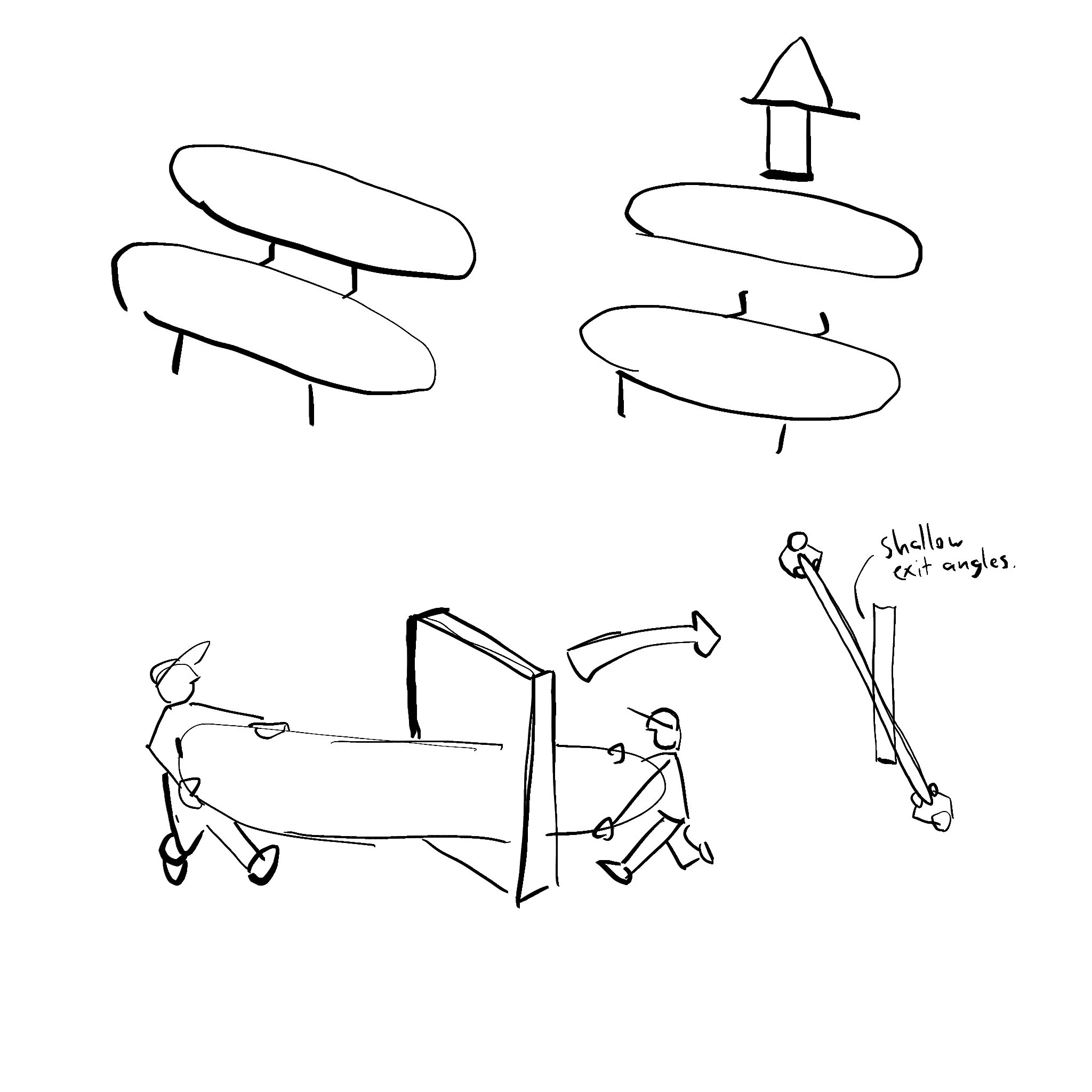
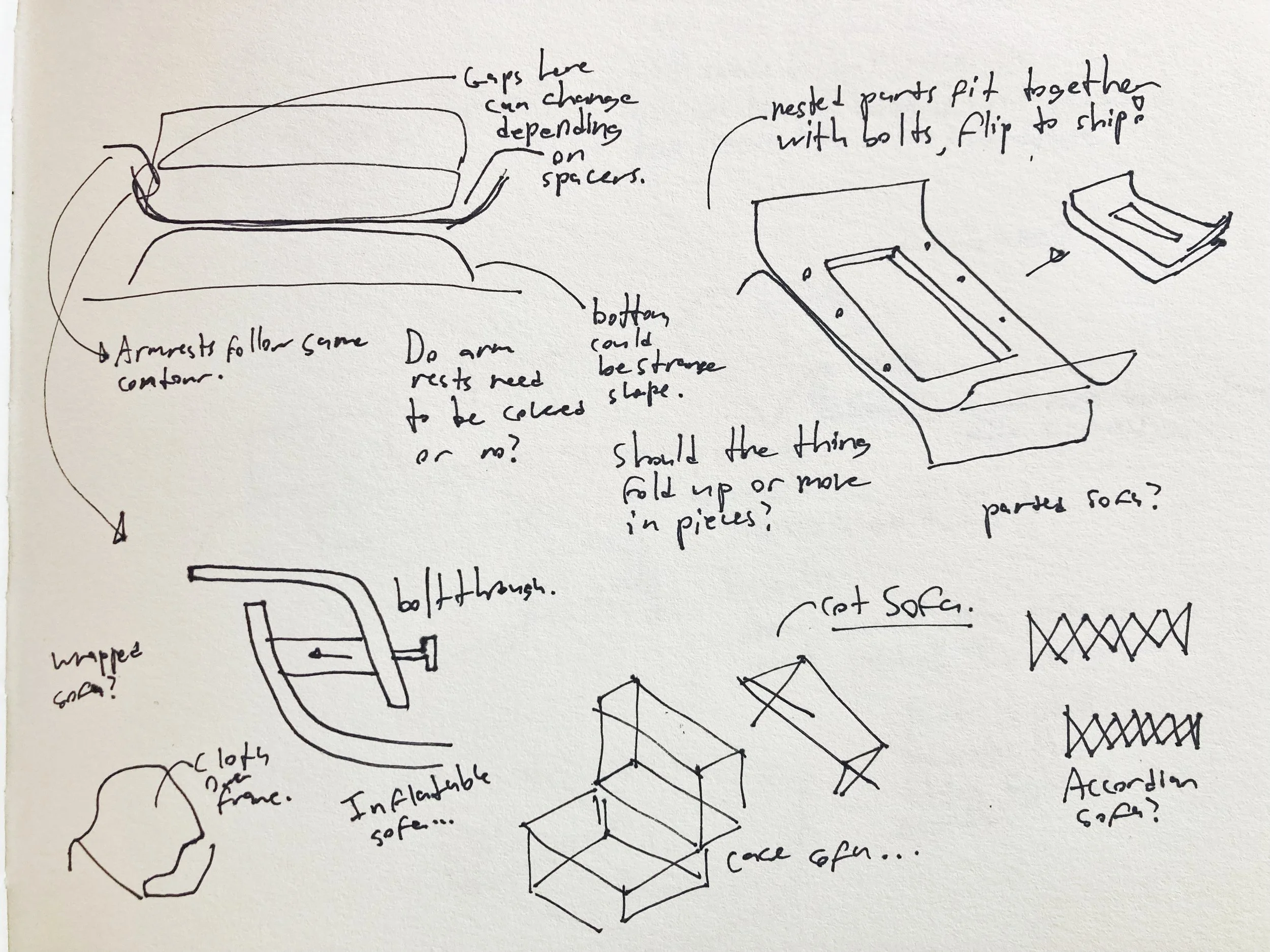
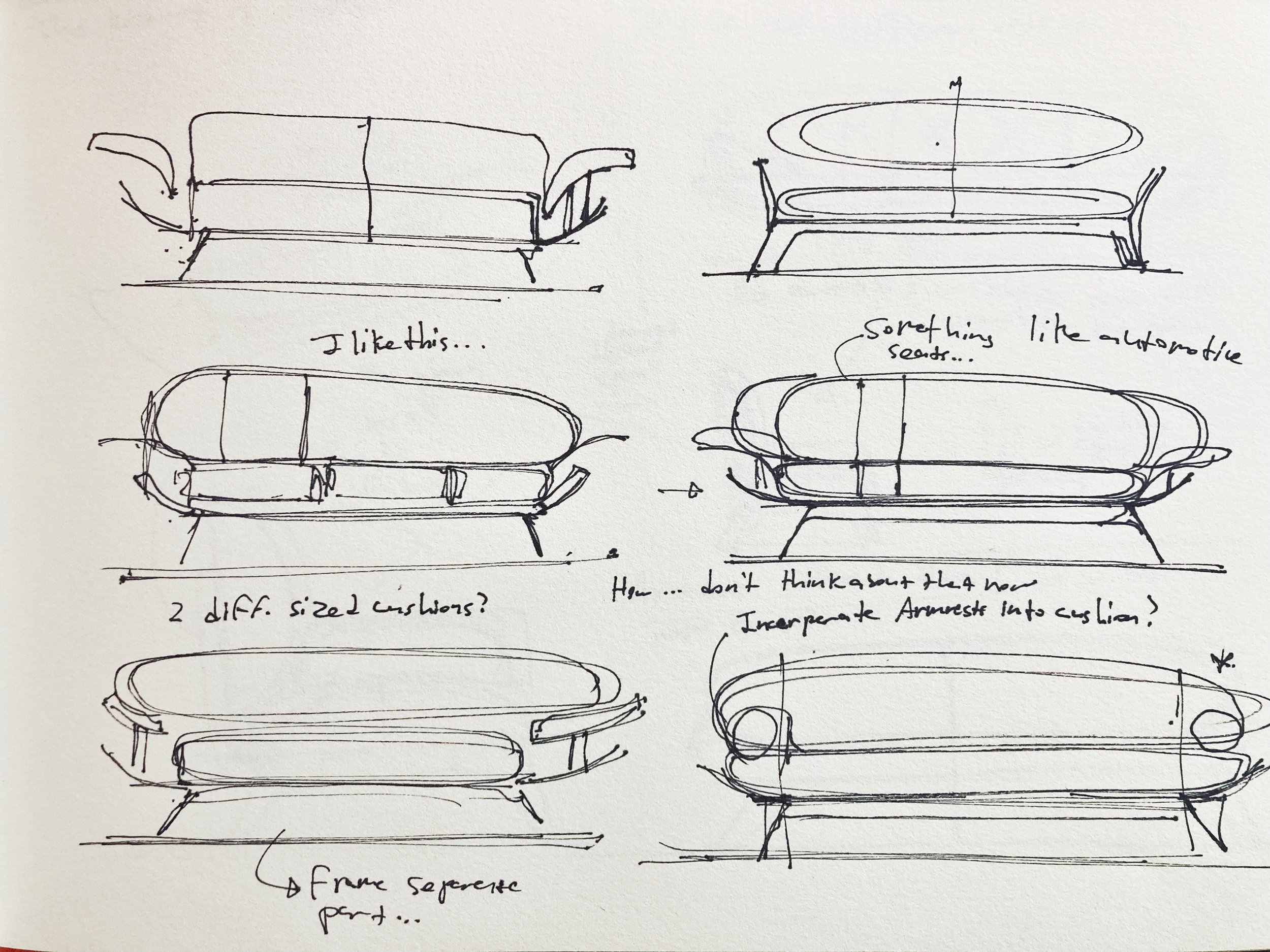
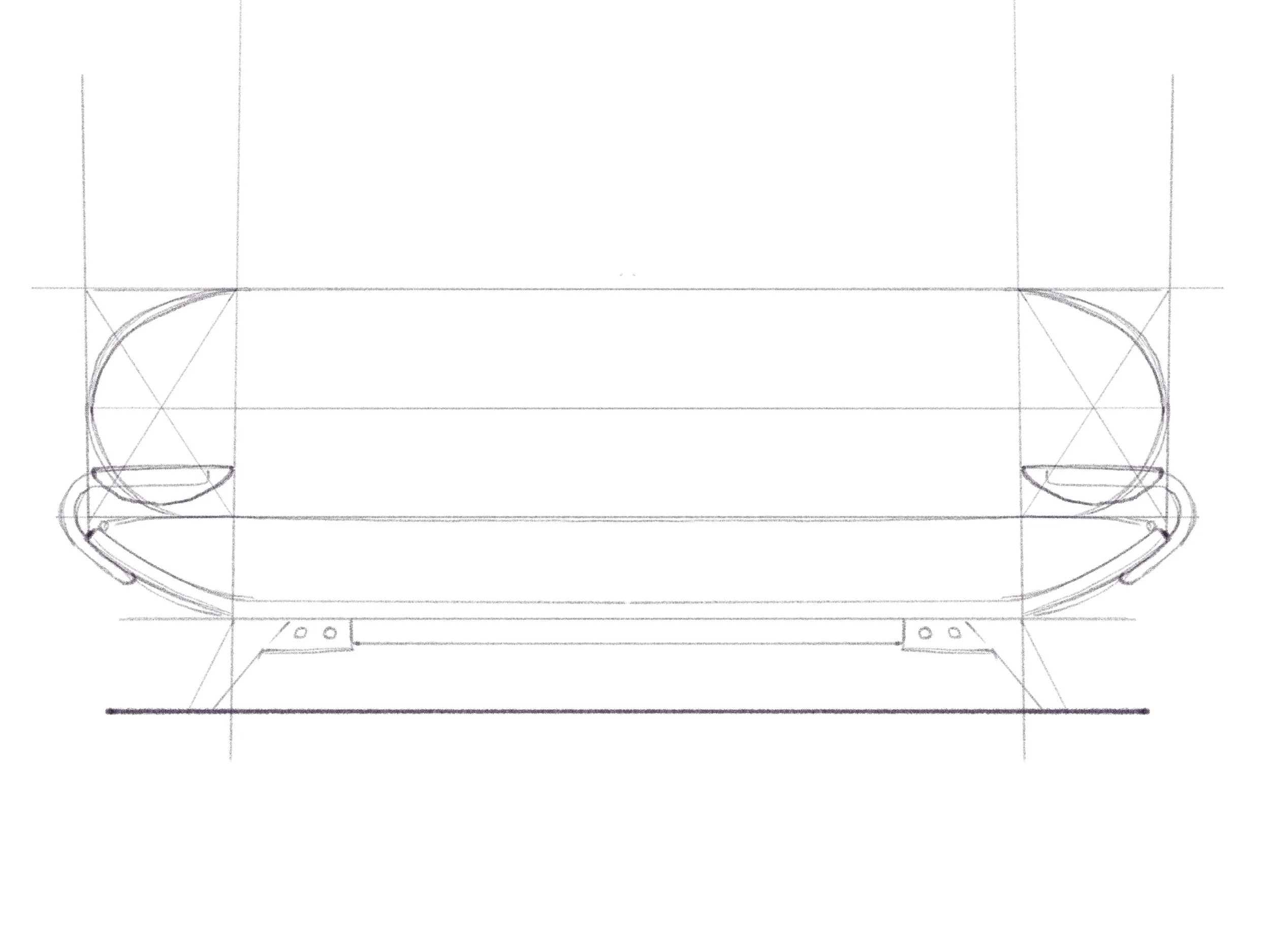
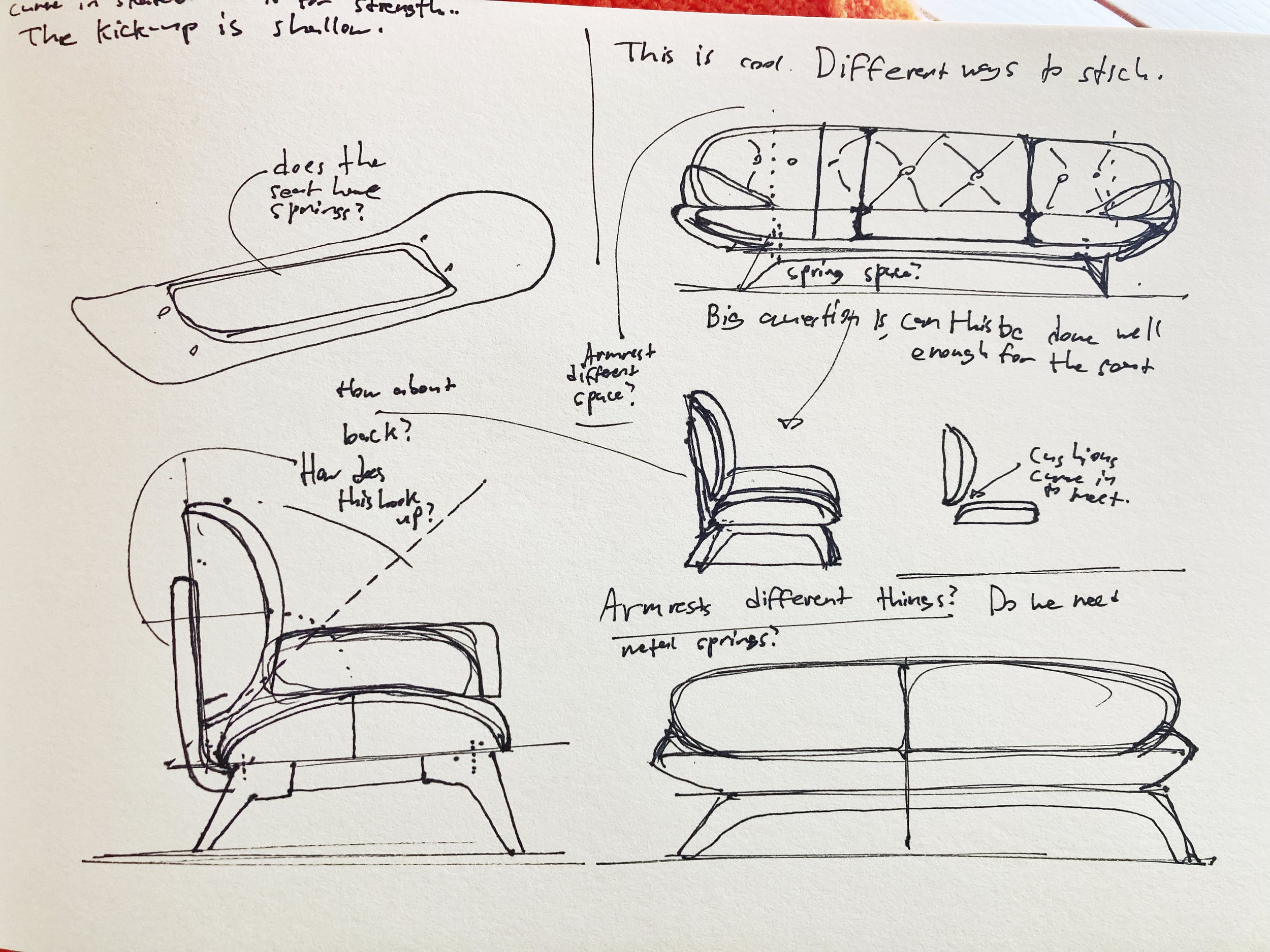
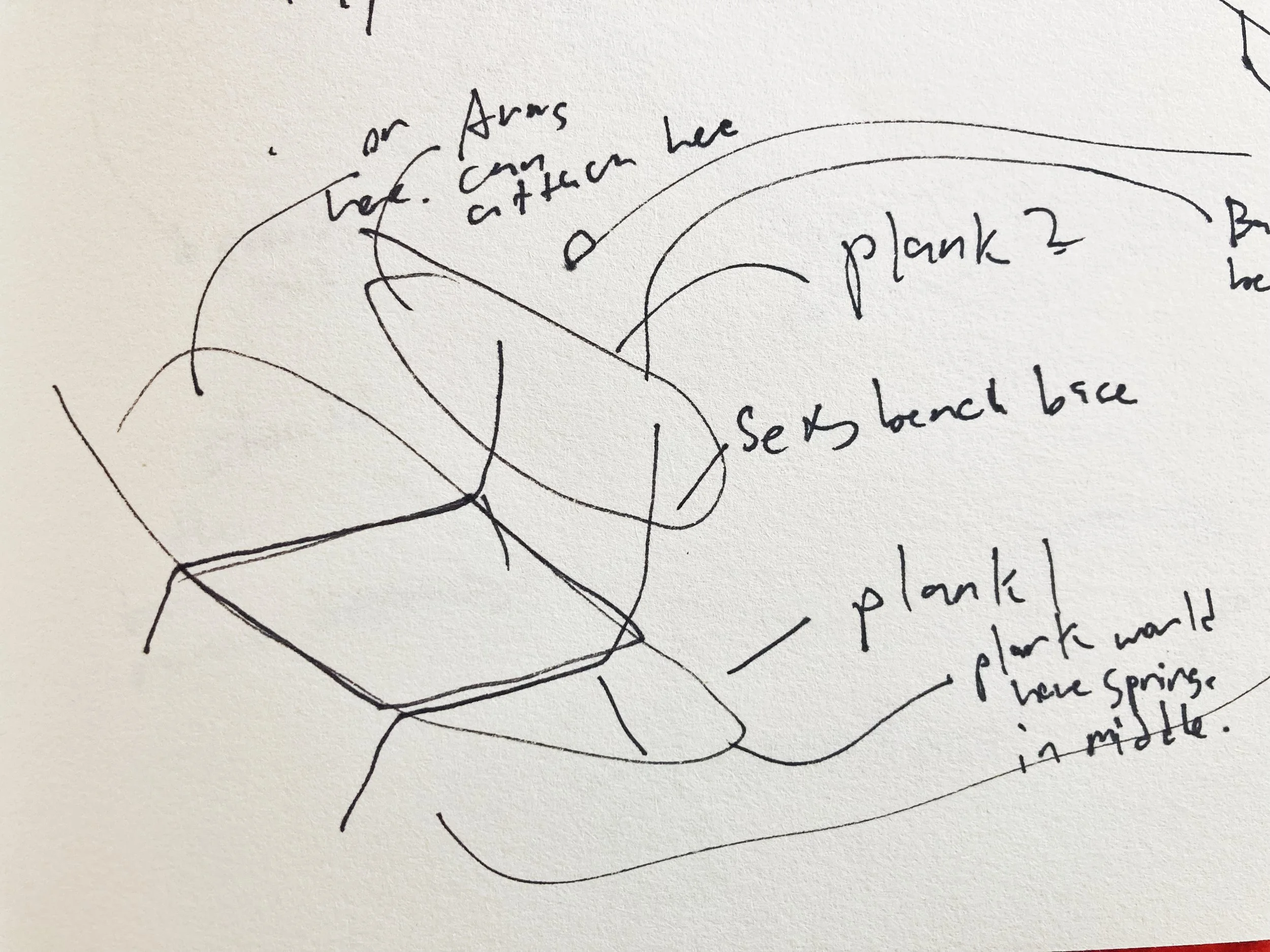
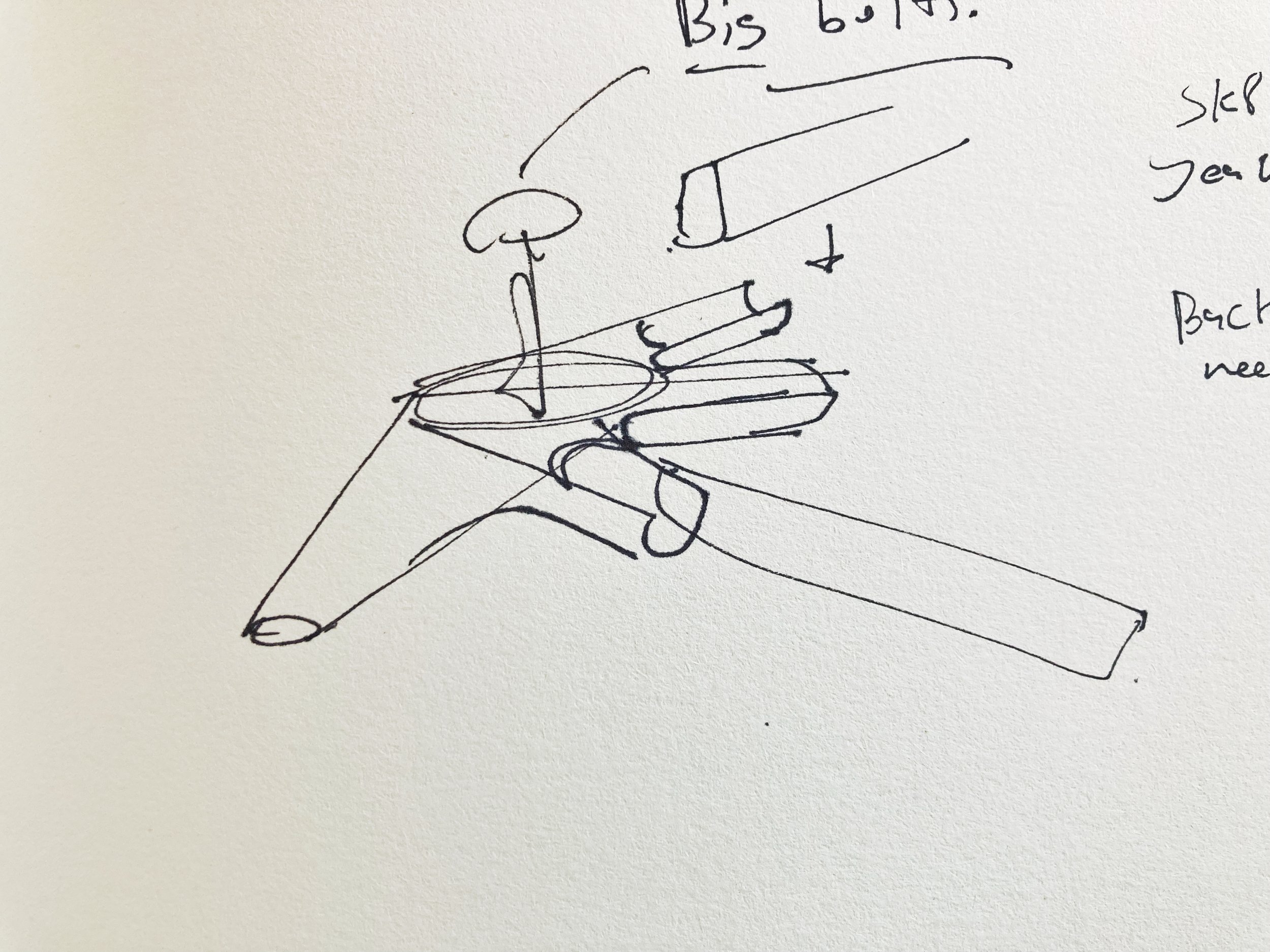
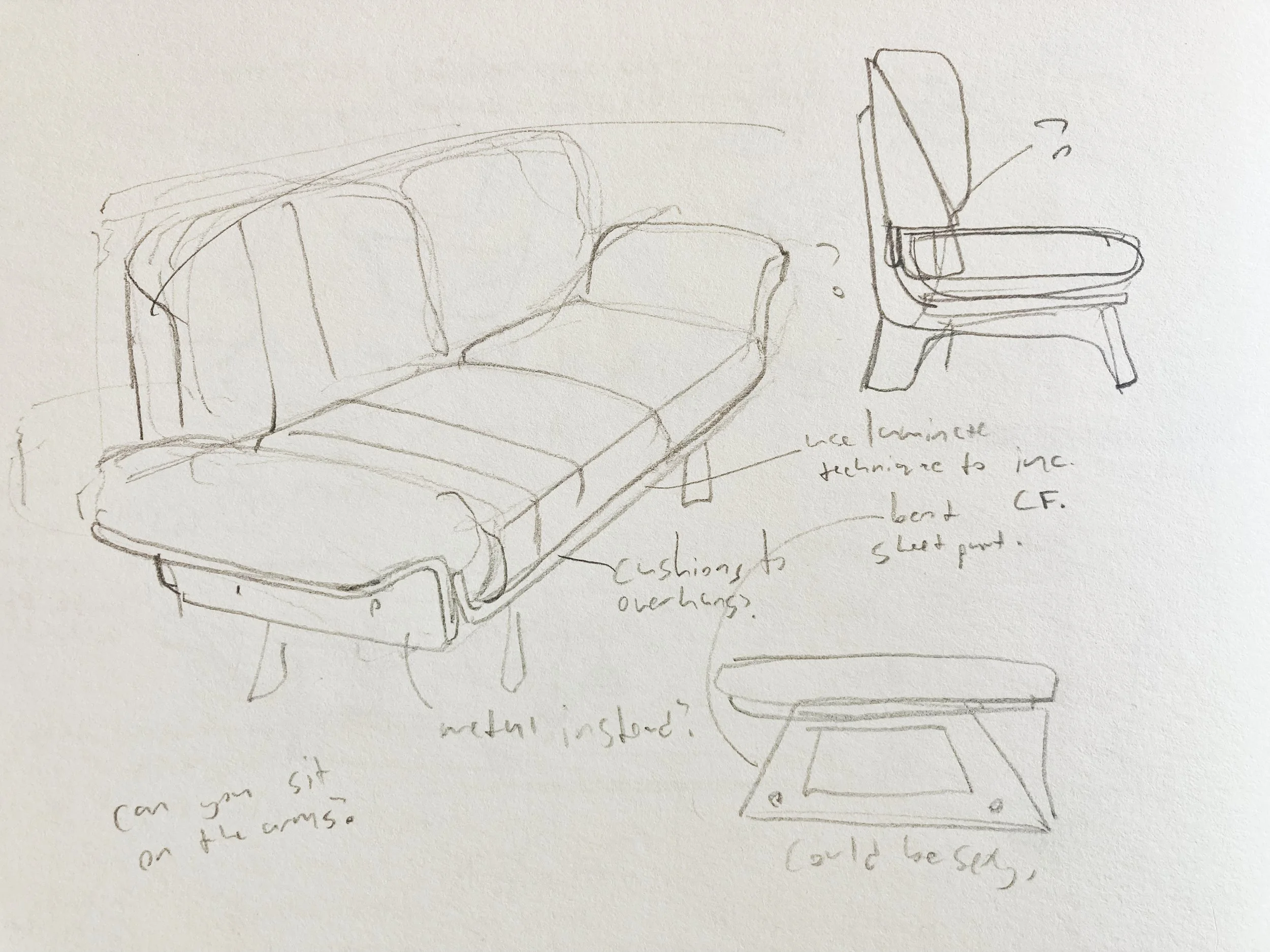
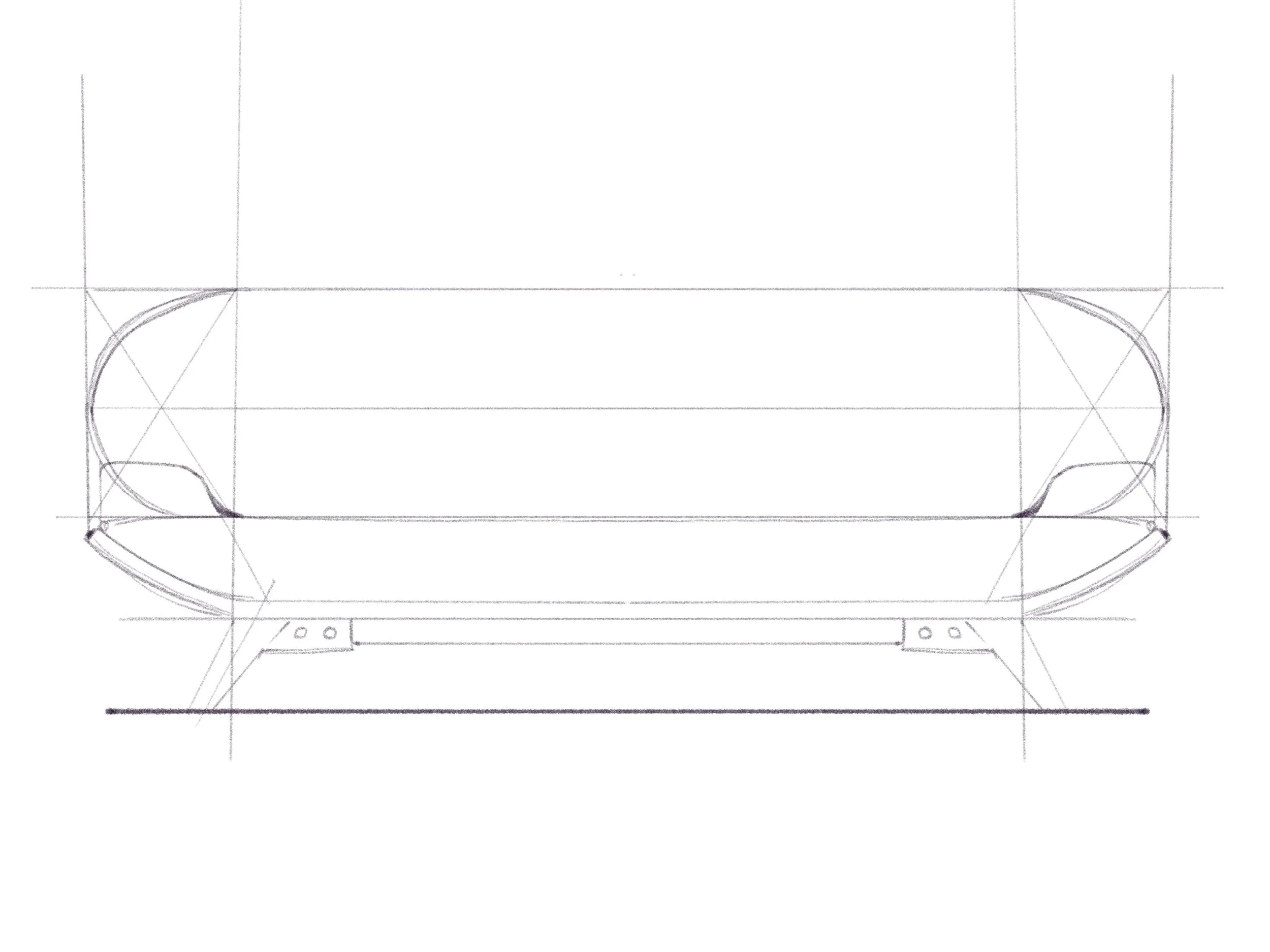
Sketching was fast and rough, spewing ideas all over the page for each little detail about this sofa. How is it out together? What does some of the joinery look like? Does it fold, or does it simply disassemble? A small doodle of an oval shape sofa made the project click. It had a sort of skateboard aesthetic, informing the idea of two scaled-up skateboards bolted together. Skateboards are pretty thin and easy to carry…what does that look like when it becomes a sofa? The rest of the creative process followed this thought.
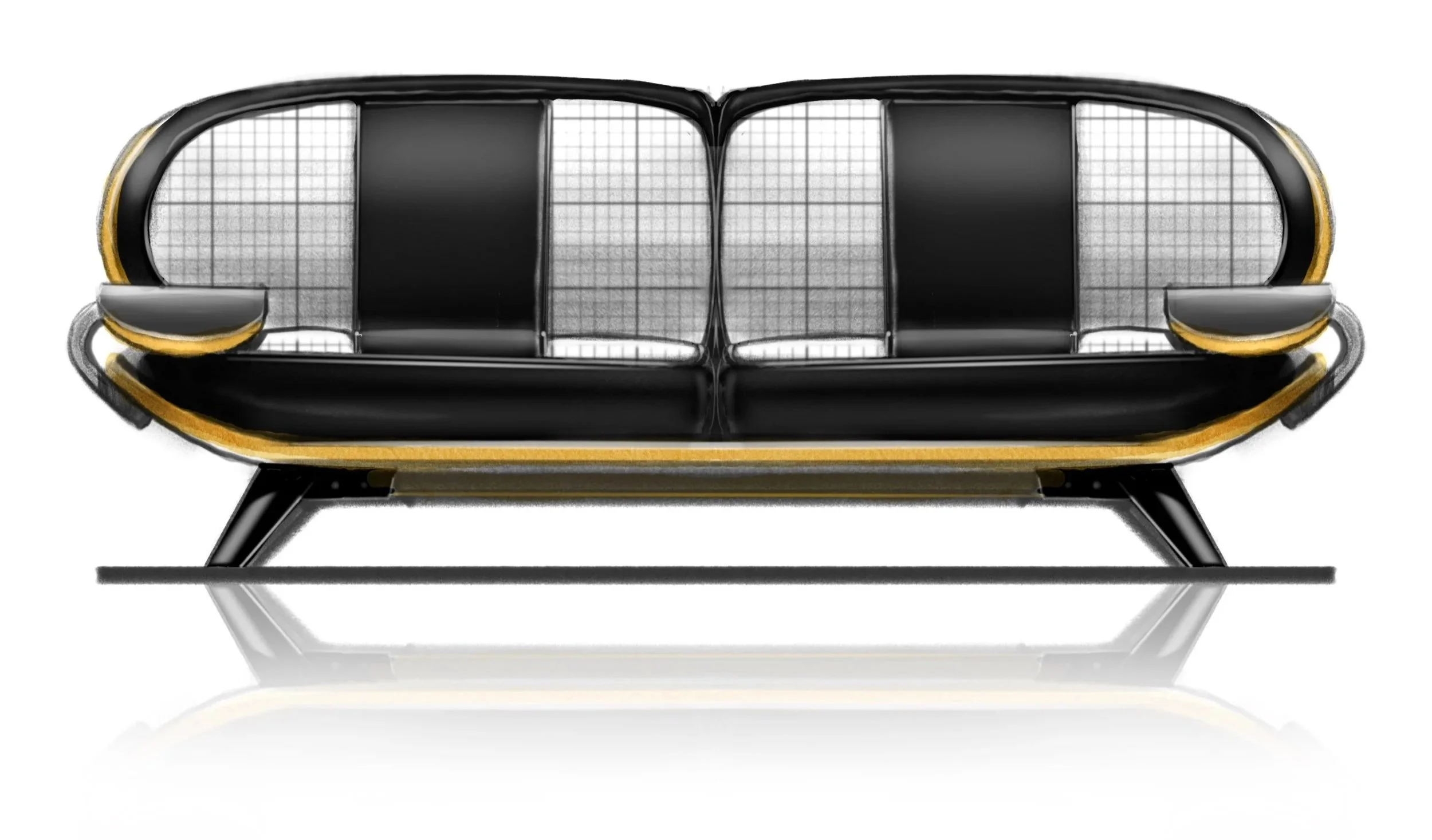
FINAL DESIGN
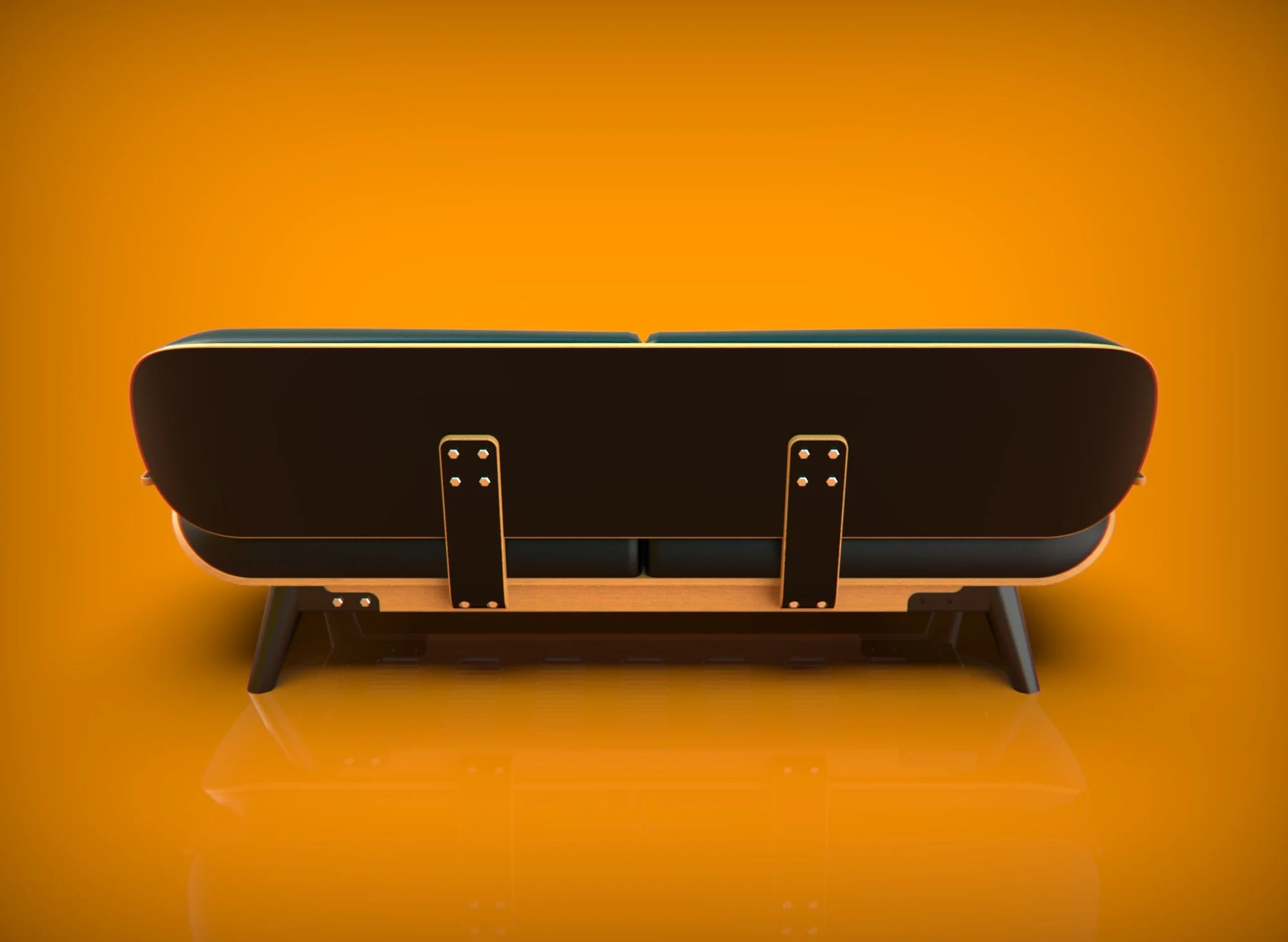
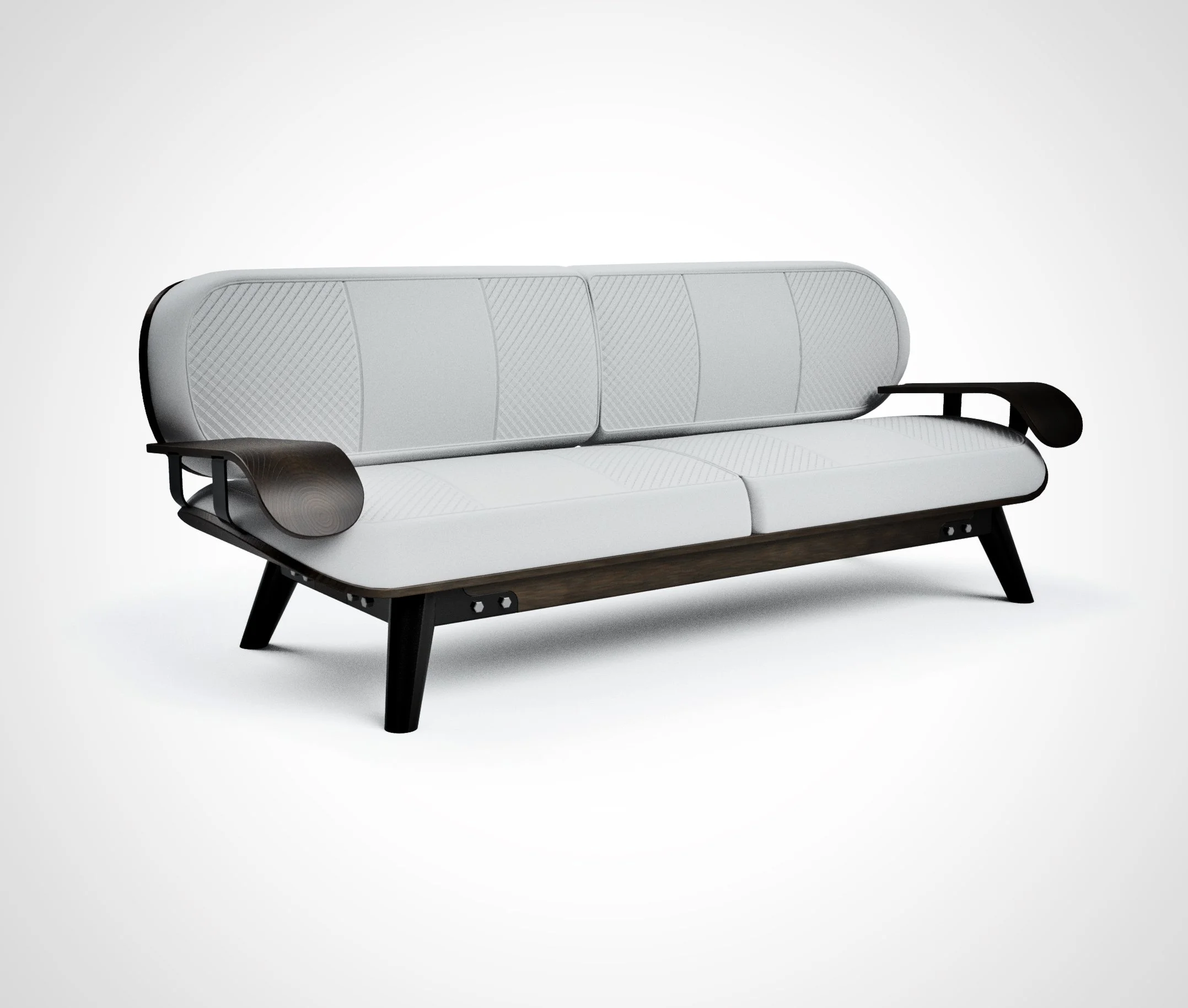
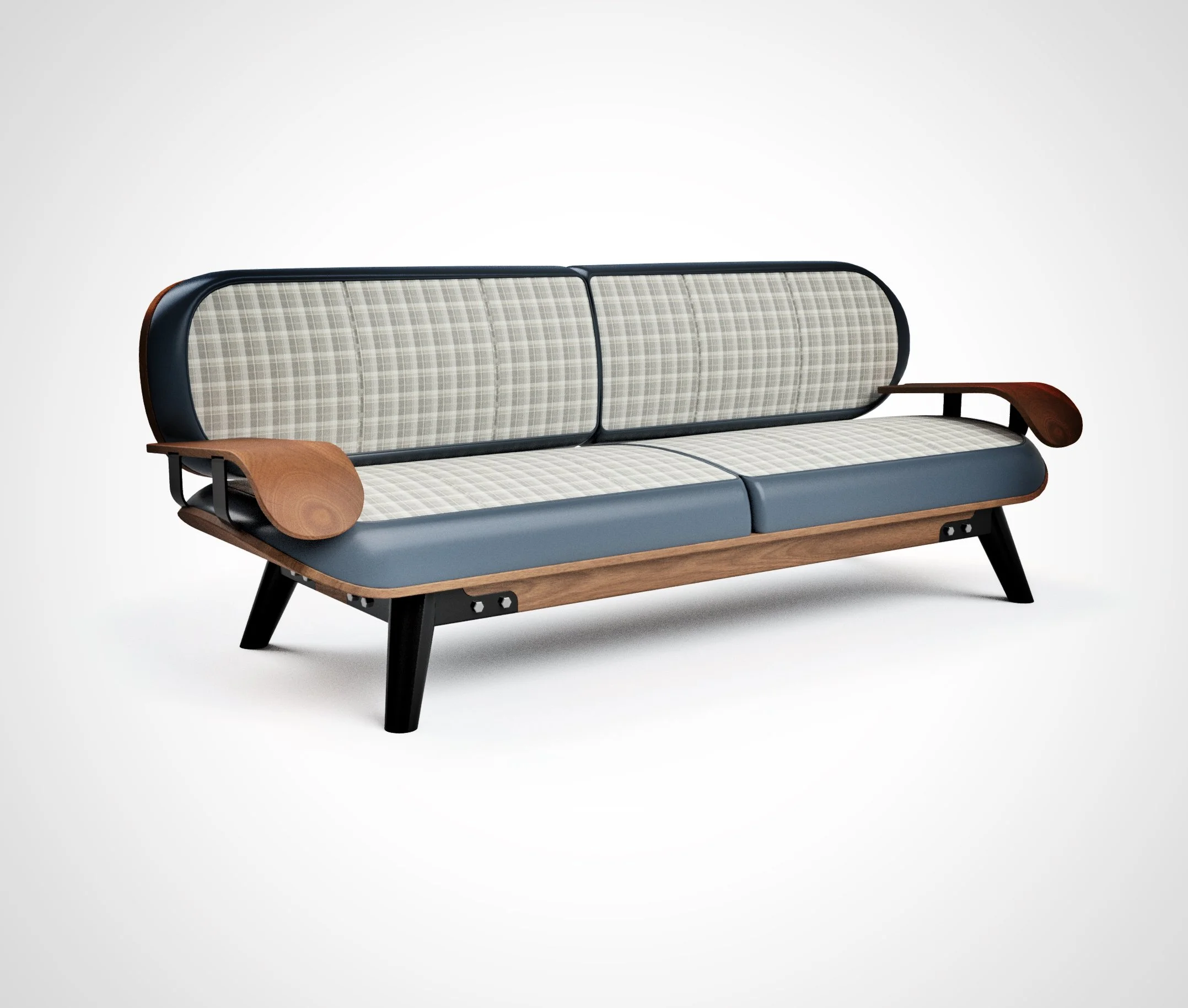
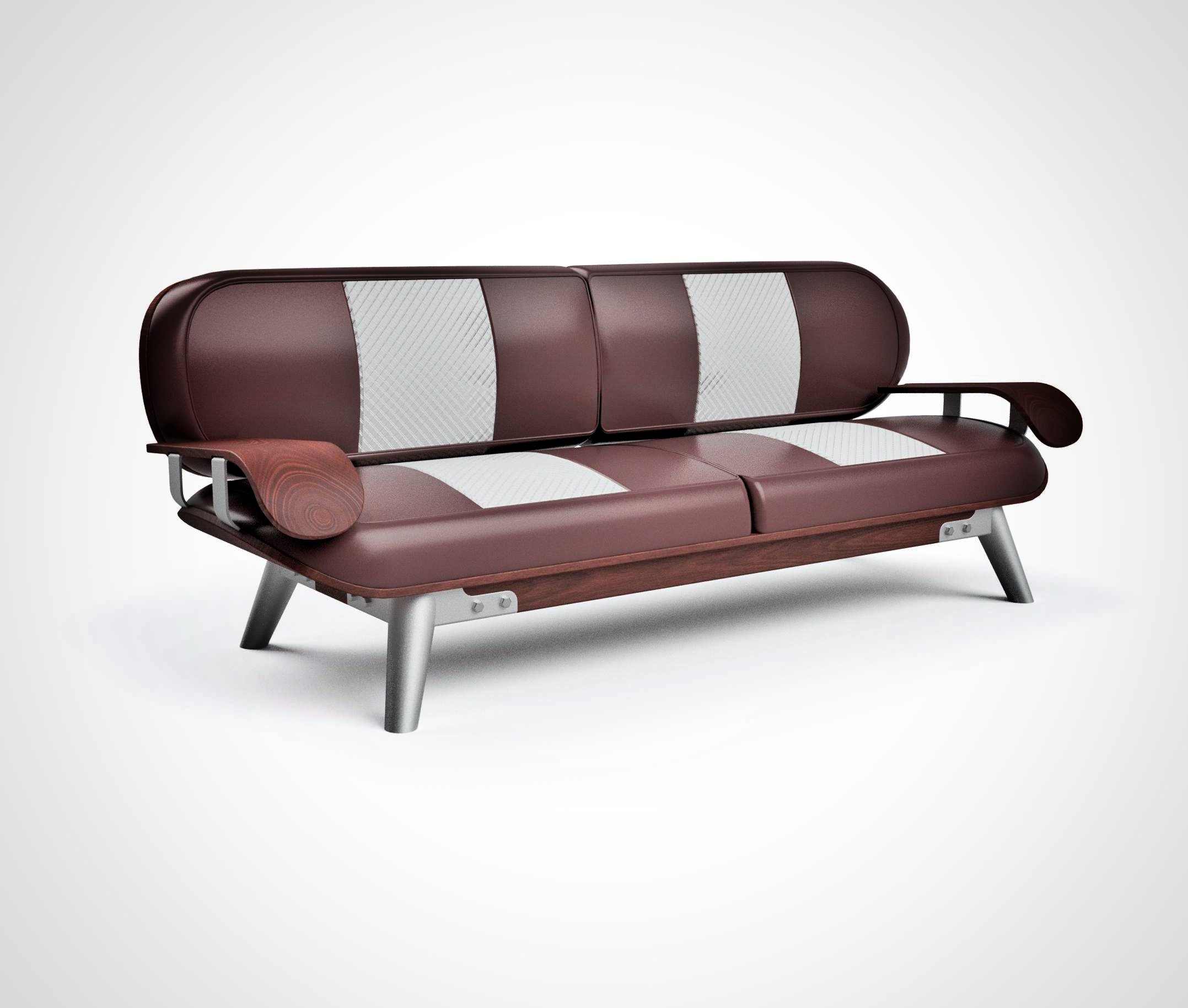
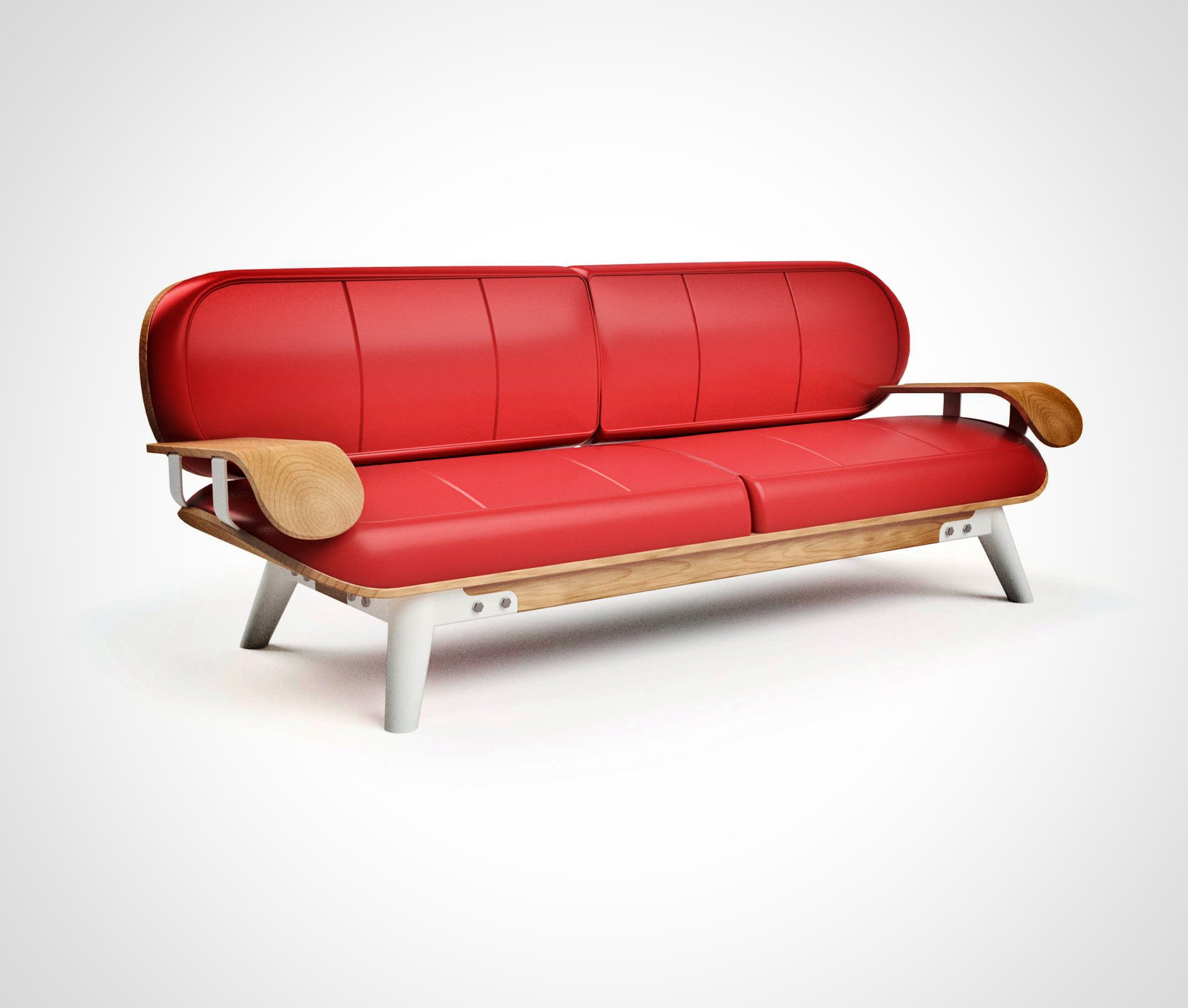
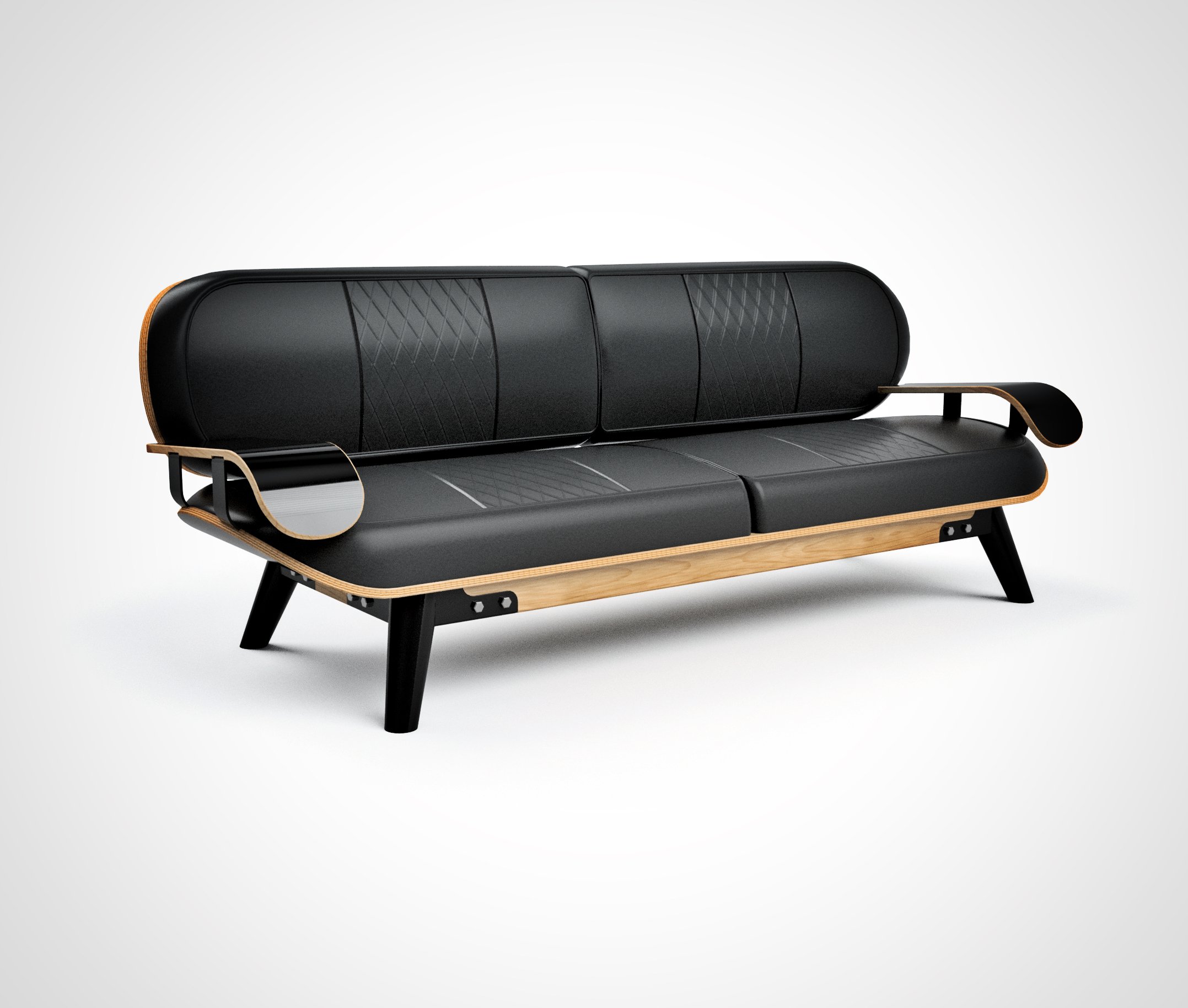
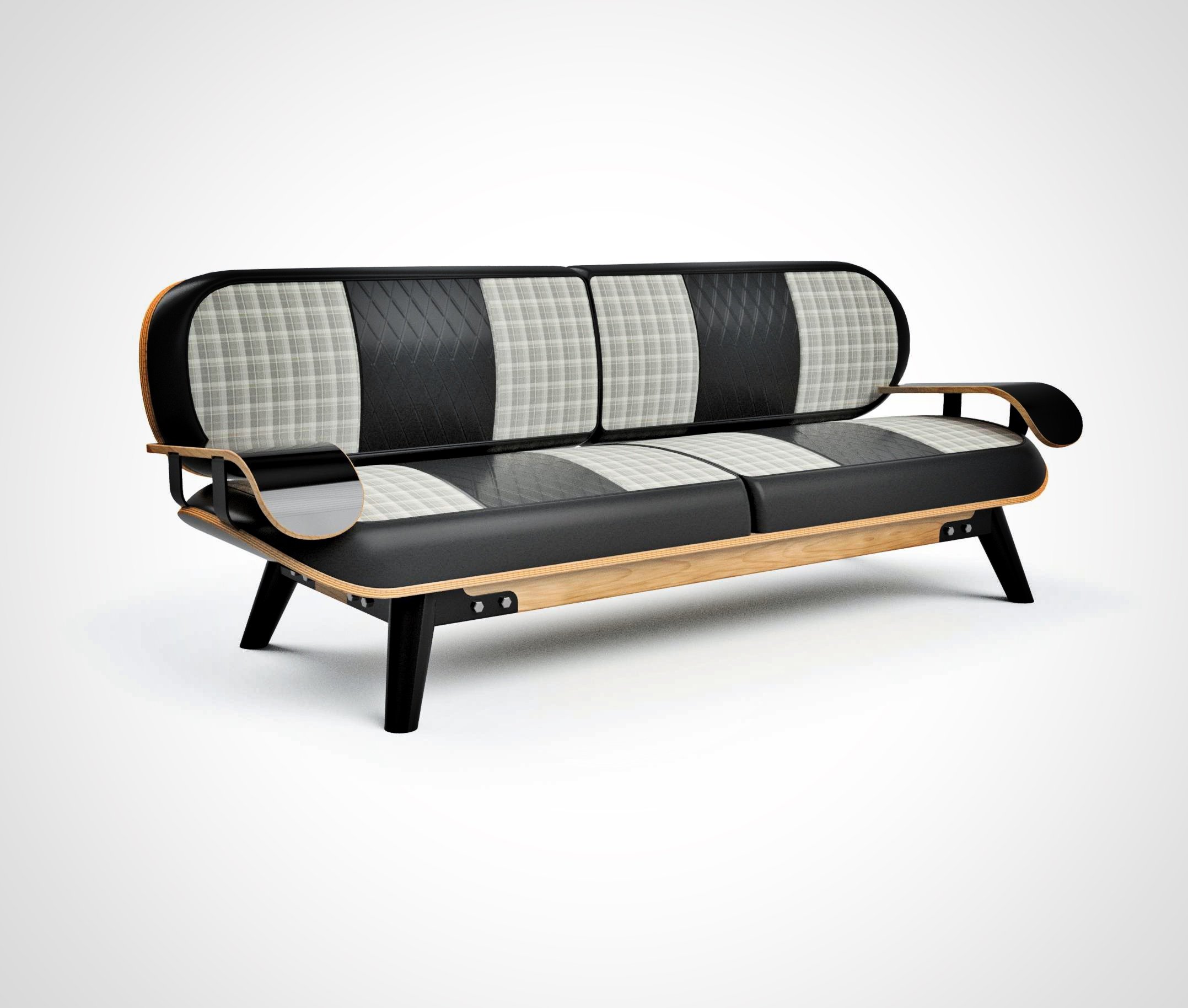
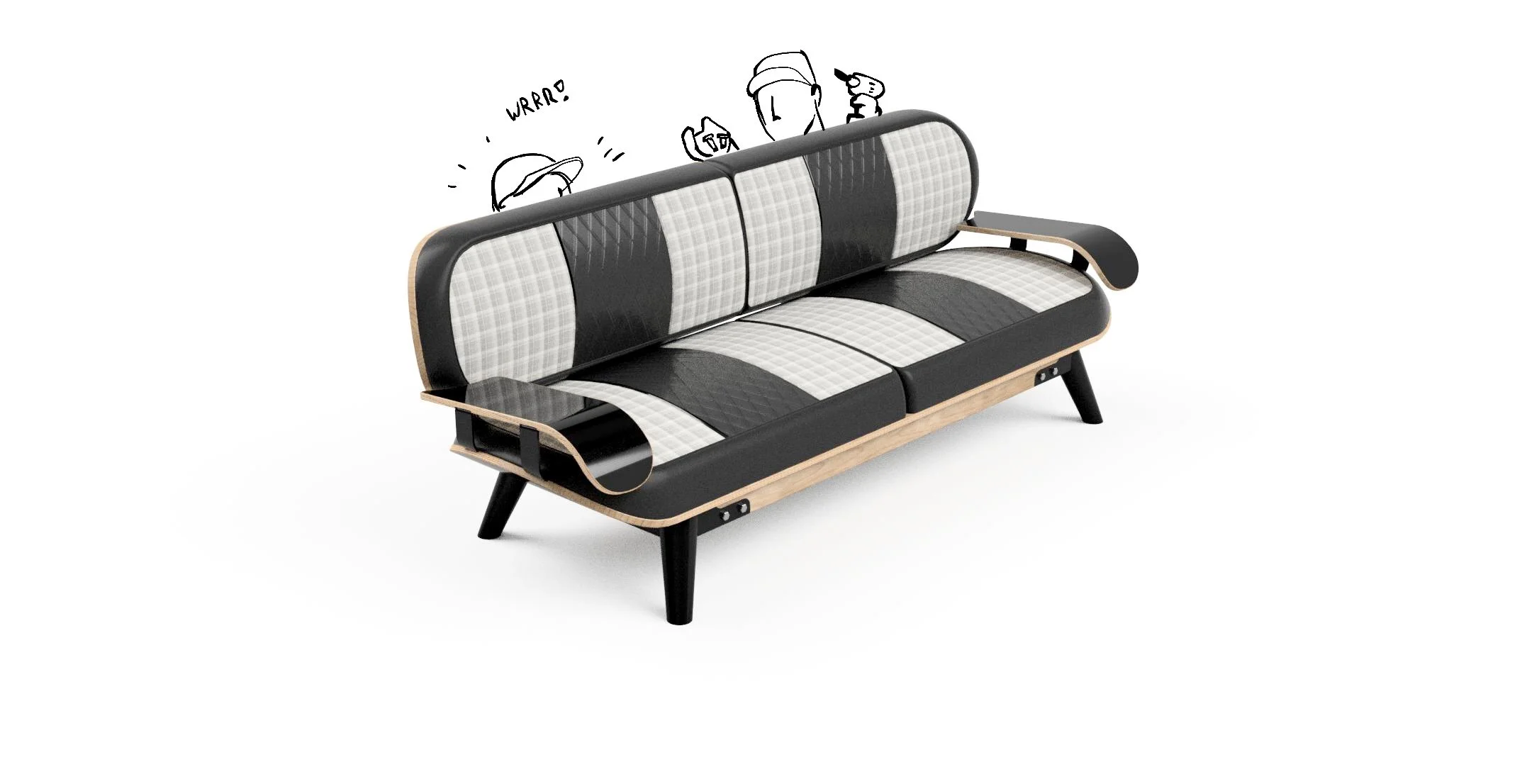
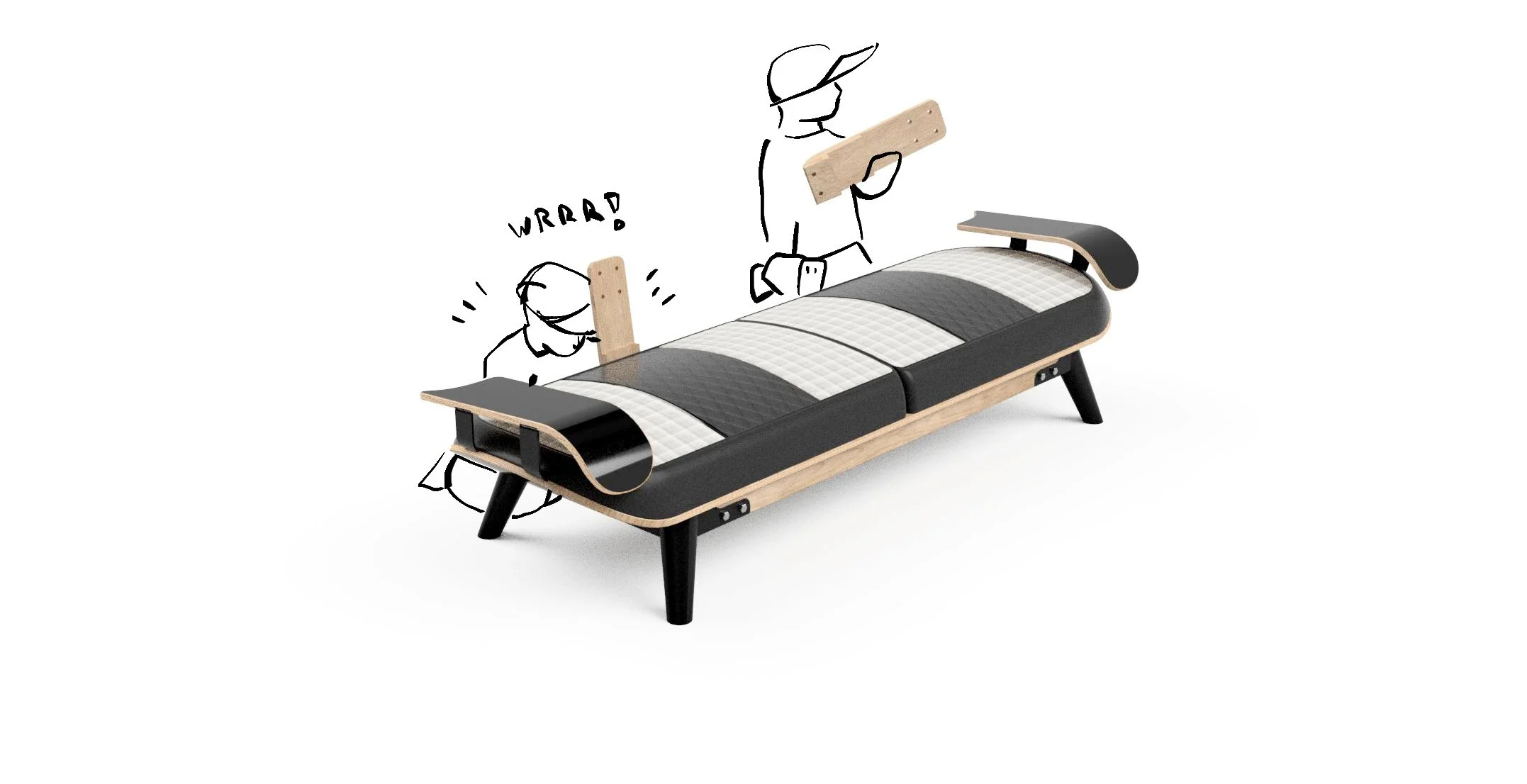
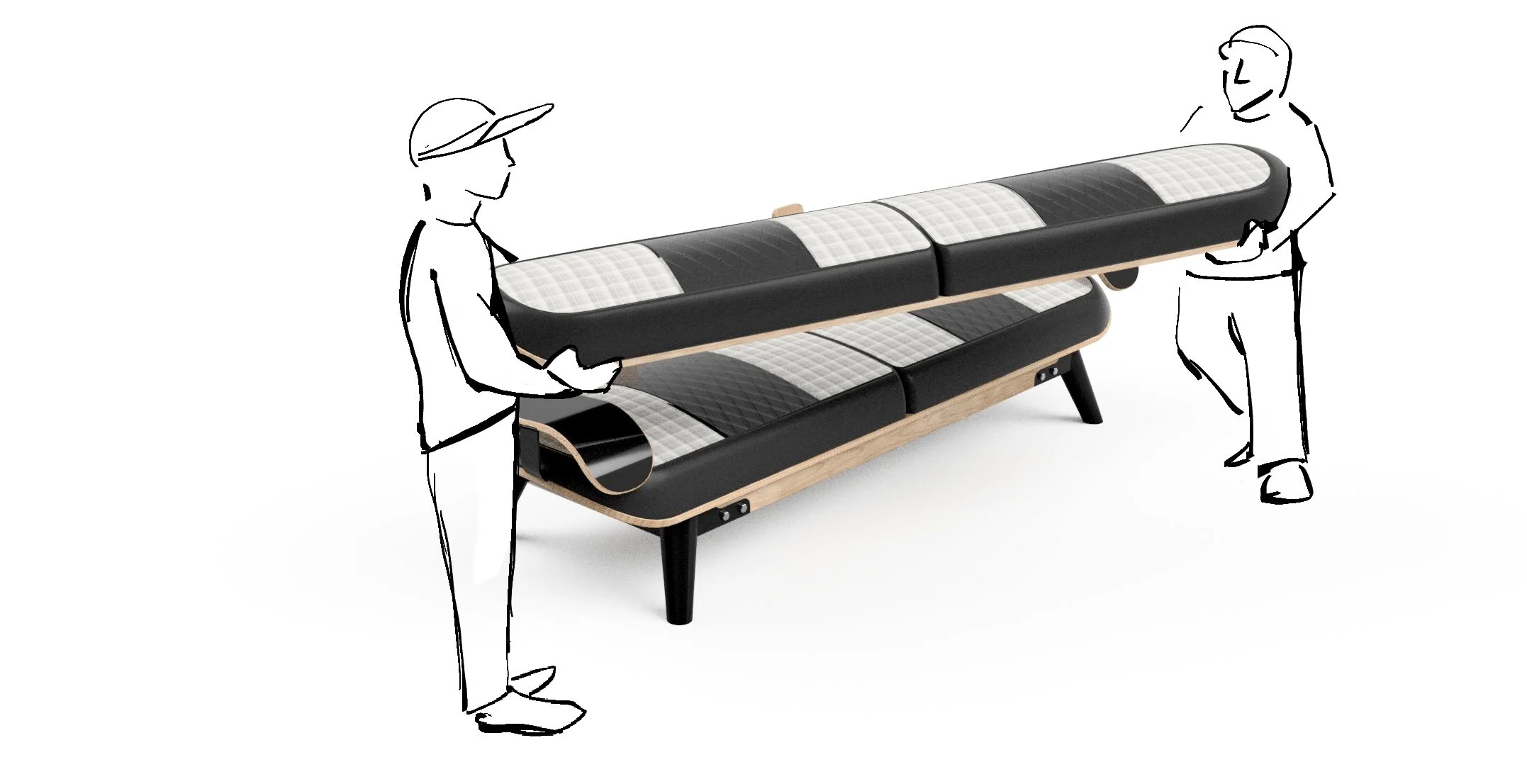
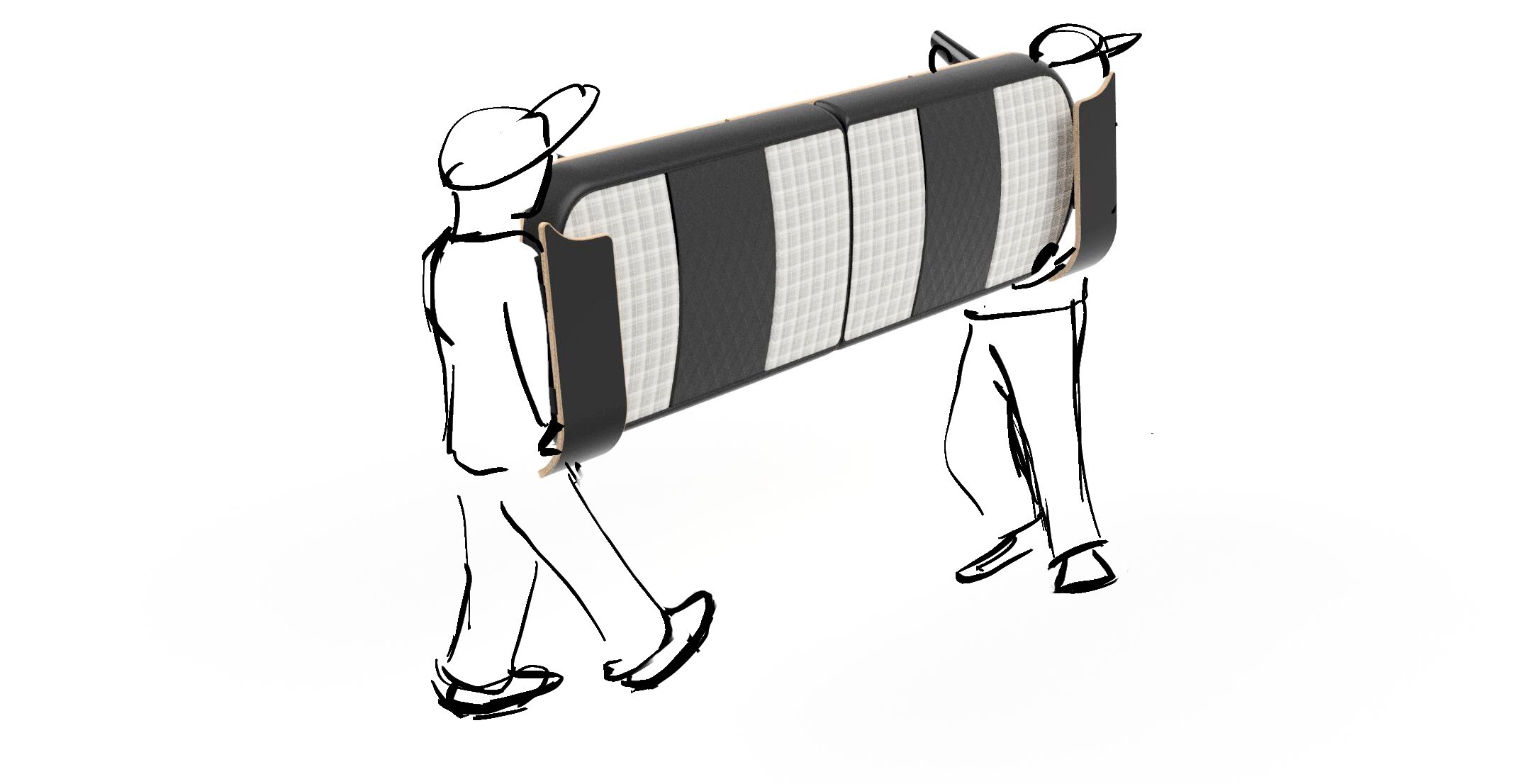
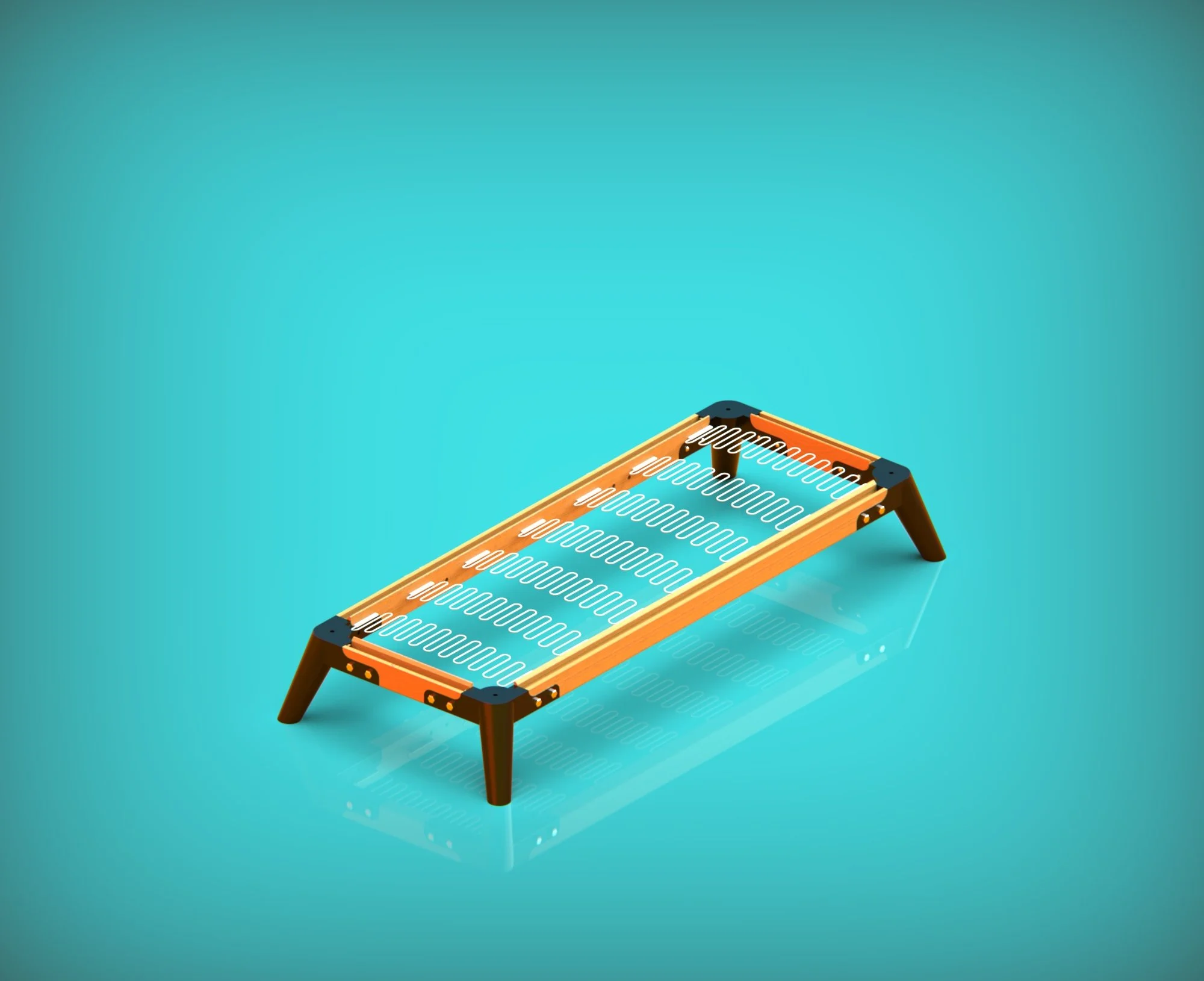
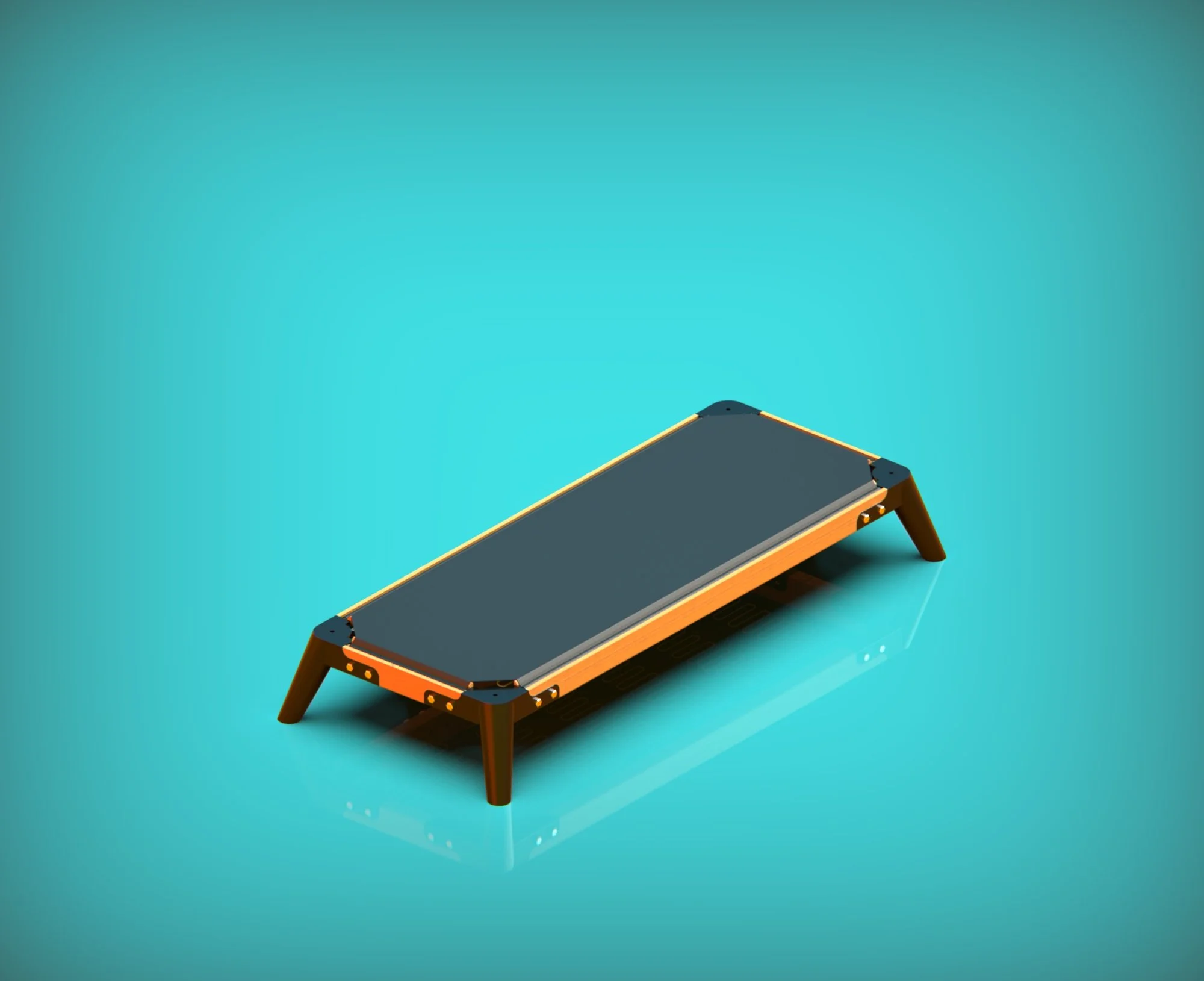
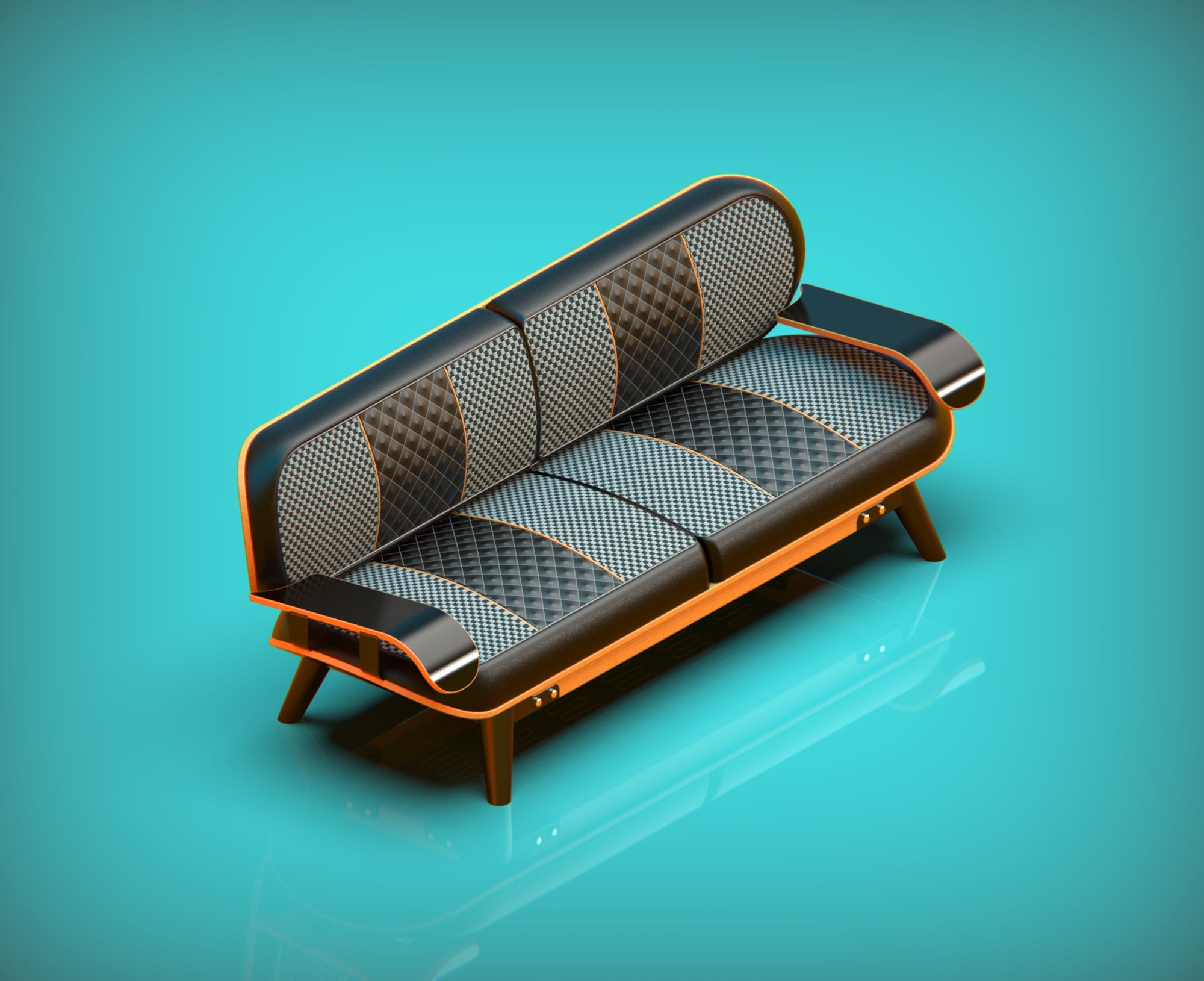
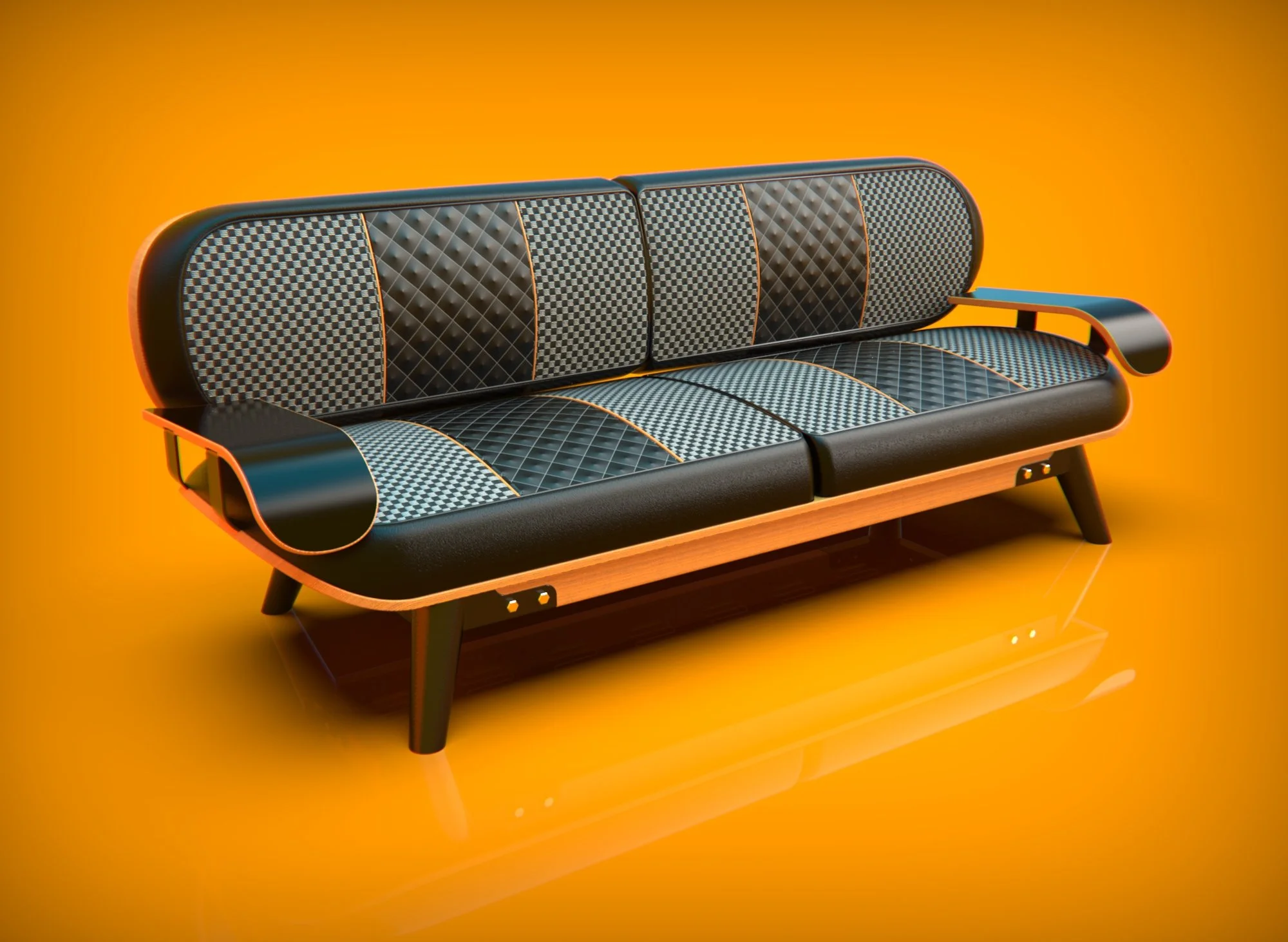
The final design became a sofa that was intended to be taken apart in two sections and moved by two people. It incorporates the same three elements of modern sofas (a frame, springs, and cushions) but reconfigures them in a way where all of the sofa’s hardware is accessible. If taking it apart in two pieces wasn’t enough, then removing any other piece, such as the cushions and the arms, was possible. Even the spring box on the bottom of the sofa can be completely unbolted from the product.
Continuing with the skateboard aesthetic, the colors and materials were chosen as a nod to skate culture of the late 90’s and early 2000’s - checkered patterns, exposed plywood, and lots of black. However, the design could also expand into other looks with different material choices. The skateboard shape does not leave it stuck to one theme.